
The route at a glance
Ten days in Spain means five cities: Barcelona (Mediterranean architecture and design), Madrid (grand museums and plazas), Córdoba (Islamic art), Seville (Andalusian soul and flamenco), and Granada (the Alhambra). The high-speed AVE trains connect all five in 2–3 hours, making this the most natural route through Spain. You'll have time to see the major sights without rushed days, eat long lunches, and return to neighbourhoods that captured you on first sight. This is the complete Spanish arc: from Barcelona's modernism through central Spain's grandeur to Andalusia's Moorish heritage.
Day-by-day breakdown
| Day | Base | What you do |
|---|---|---|
| 1 | Barcelona | Arrive at Barcelona-El Prat Airport. Private transfer to your hotel in the Eixample or Gothic Quarter. Afternoon at leisure: La Rambla, Port Vell waterfront, or Plaça Reial. Evening in a neighbourhood café. |
| 2 | Barcelona | Art and architecture guide for Sagrada Família (Gaudí's unfinished masterpiece with kaleidoscopic light), Park Güell (mosaic terraces above the city), and Passeig de Gràcia's undulating facades (Casa Batlló, Casa Milà). |
| 3 | Barcelona | Walking guide through the Gothic Quarter's medieval maze, Barcelona Cathedral with its cloister of thirteen white geese, the Born district and Santa Maria del Mar. Afternoon free: Mercat de Santa Caterina, the Picasso Museum, or La Rambla at dusk with vermouth. |
| 4 | Madrid | High-speed AVE train Barcelona to Madrid (3 hours). Private transfer from Atocha station. Afternoon to explore: Retiro Park, the Prado façade, or Gran Vía. Evening in your neighborhood. |
| 5 | Madrid | Private guide for Madrid's grandeur: Plaza Mayor's arcaded squares, the Royal Palace's three thousand rooms, Madrid de los Austrias with its wrought-iron balconies, Mercado de San Miguel for Spanish gastronomy (jamón, cheese, seafood, wine). |
| 6 | Madrid or Toledo | Art historian guide for the Prado Museum: Velázquez's Las Meninas, Goya's Black Paintings, El Greco's saints. Afternoon: the Golden Triangle (Reina Sofía, Thyssen-Bornemisza, Prado itself), Retiro Park, or optional full day trip to Toledo (the 'City of Three Cultures'). |
| 7 | Córdoba | AVE train Madrid to Córdoba (2 hours through olive country) or Madrid to Seville with a Córdoba stop. Private guide through the Mezquita's 856 red-and-white arches, the Judería (Jewish Quarter) with its whitewashed streets and tiny Synagogue, Roman Bridge at sunset. Or continue to Seville and visit Córdoba en route with a lunch stop. |
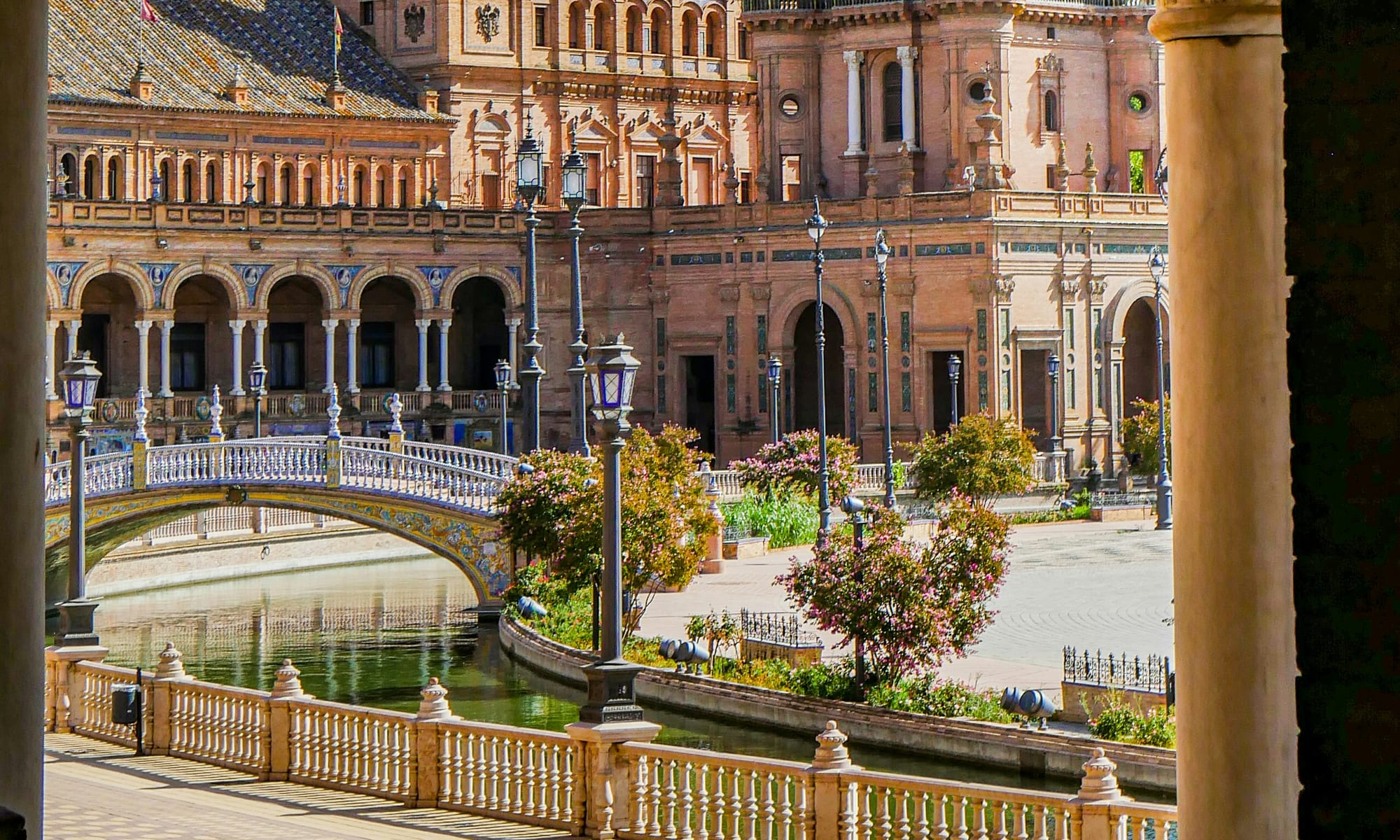
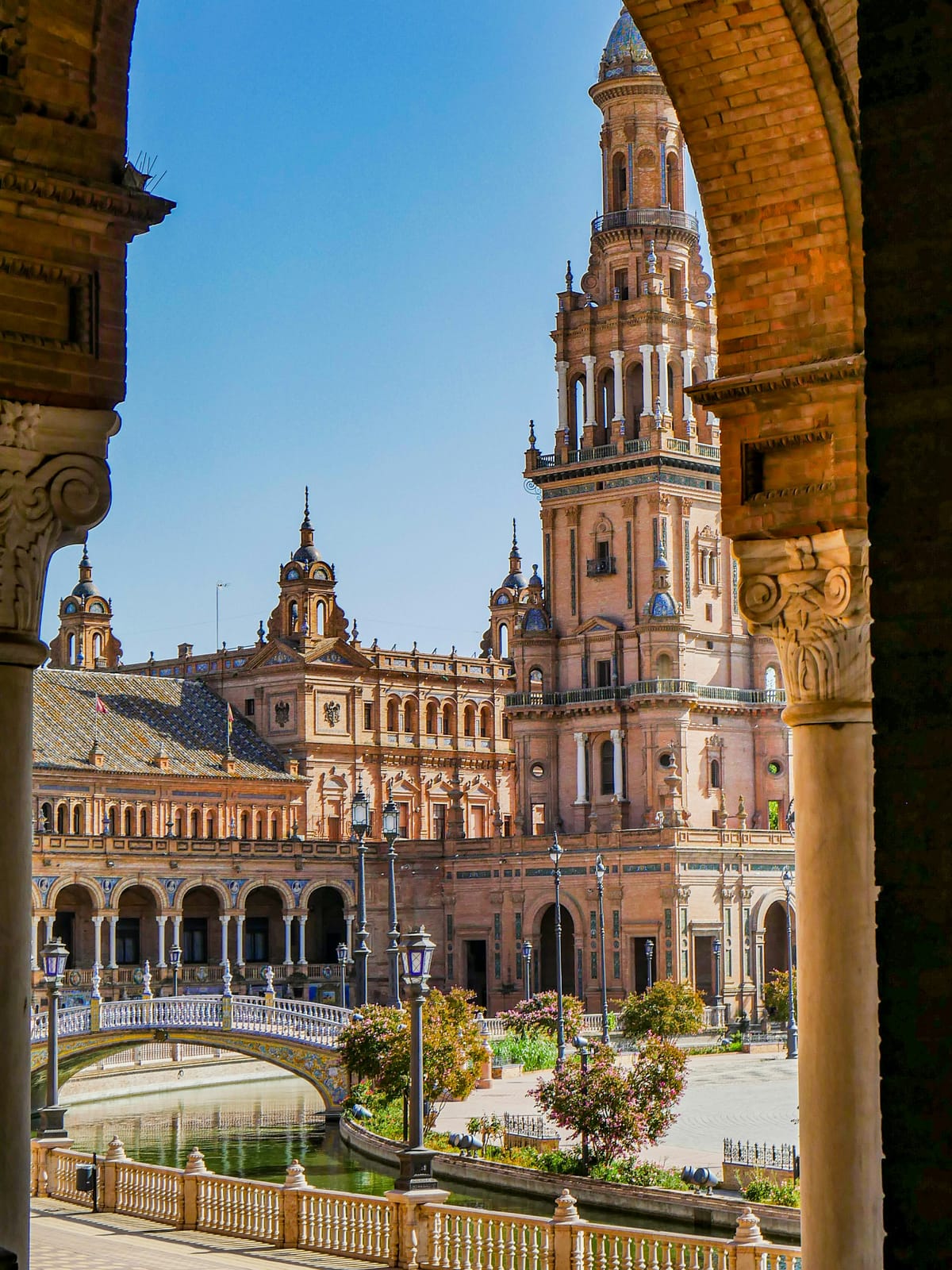
| 8 | Seville | Cathedral of Seville (the world's largest Gothic cathedral, where Columbus's tomb rests), climb the Giralda Tower for panoramic views across terracotta rooftops. The Real Alcázar: Mudéjar tilework, carved stucco, and lush gardens. Santa Cruz quarter's flower-lined alleys. Optional flamenco evening in an intimate tablao. |
| 9 | Granada | AVE or road journey Seville to Granada through the Andalusian countryside. Afternoon in the Albaicín (ancient Moorish quarter of steep alleys and carmens with hidden gardens). Sunset from Mirador de San Nicolás: the Alhambra framed against the Sierra Nevada. |
| 10 | Granada | Private guided tour of the Alhambra: Nasrid Palaces (carved surfaces so intricate they seem to vibrate), Court of the Lions, Hall of the Ambassadors, water gardens of the Generalife. Alcazaba fortress for Sierra Nevada views. Afternoon free or departure afternoon. |
Barcelona — three days of modernism
Barcelona is Gaudí and the Gothic Quarter in equal measure. Your first day is arrival and settling: the hum of La Rambla, the waterfront where fishing boats moor next to superyachts, the hidden plazas of the old city. Day two is Gaudí at full immersion. The Sagrada Família is not just a church but a theology in stone — columns that grow organic, stained glass flooding the interior with coloured light, a building that has been under construction since 1882 and still somehow feels like it's being written. Park Güell's mosaic terraces overlook the entire city, and the Passeig de Gràcia holds Casa Batlló and Casa Milà, where Gaudí refused to draw a straight line and the façades seem to ripple and breathe. Day three peels back medieval Barcelona: the Gothic Quarter's narrow alleys where Roman walls lie beneath medieval streets, the Barcelona Cathedral with its cloister of thirteen white geese, the Born district and Santa Maria del Mar where fishermen built a basilica as beautiful as any cathedral. By the end of three days, you understand why Barcelona is a city where architecture is not decoration but narrative.
Madrid — three days of grandeur
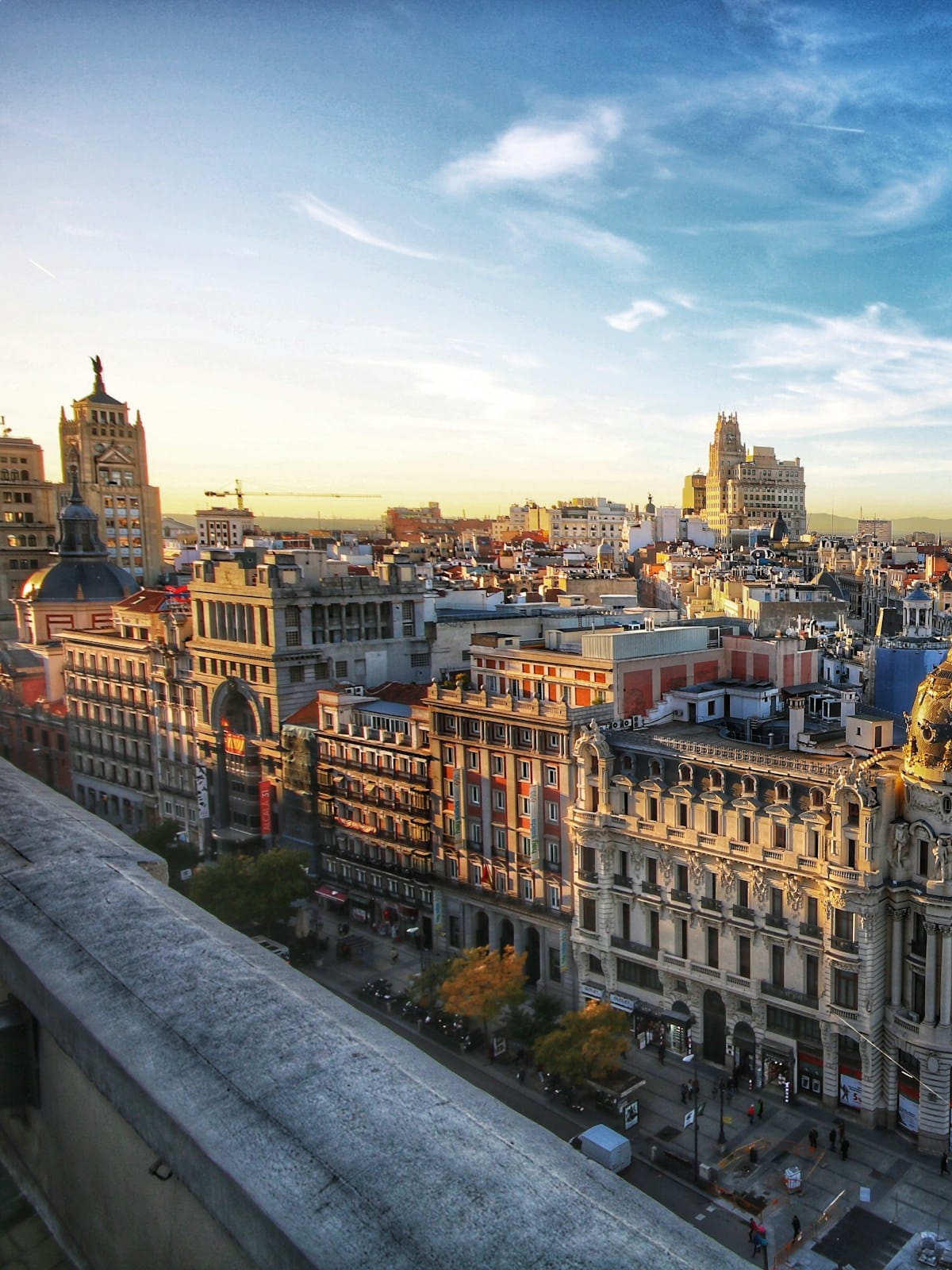
Madrid is a city of plazas and museums and a rhythm that starts late and ends later. The high-speed AVE from Barcelona arrives at Atocha station, itself a lush greenhouse under soaring iron-and-glass. Your first Madrid day is the city's grandeur: Plaza Mayor with its arcaded squares and Habsburg weight, the Royal Palace with three thousand rooms and ceilings painted by the greatest artists of centuries, the maze of Madrid de los Austrias where convents and wrought-iron balconies still speak of Spanish power. Mercado de San Miguel is a temple to Spanish food — jamón carved to order, manchego from the real producers, fresh seafood, wine flowing freely. Your second day is the Prado, one of the world's great art museums. An art historian guide takes you through Velázquez's Las Meninas (the painting that changed what art could do), Goya's Black Paintings, El Greco's elongated saints. The Prado is vast; a guide keeps you from drowning. Afterward, the Golden Triangle: the Reina Sofía, the Thyssen-Bornemisza, the Prado itself form a triangle of European painting that few cities can match. Or choose a full day trip to Toledo, where the streets are so narrow they barely fit a person, and El Greco's paintings hang in the churches where he imagined them.
Córdoba — the Mezquita
Córdoba sits between Madrid and Seville on the high-speed rail, and it's worth a full stop or at least a long lunch. The Mezquita is one of the world's most extraordinary buildings — not a mosque or a cathedral, but both layered into each other. The interior is a forest of 856 red-and-white striped arches receding into shadow, the light filtering through in ways that make the space feel infinite. Your guide traces the building's history: Roman temple, Visigothic church, Umayyad mosque at its height, Christian cathedral taking over the core. From the Mezquita, walk the Judería, Córdoba's medieval Jewish Quarter, where whitewashed streets are hung with flowers and the tiny Synagogue — one of only three surviving in Spain — still stands in a courtyard too small for its own significance. The Roman Bridge over the Guadalquivir offers the best views back toward the old city in the golden light of late afternoon. You can base yourself here for a night, or Córdoba works beautifully as a long lunch stop between Madrid and Seville, with your driver waiting while you wander the old quarter.
Seville — Andalusia's heart
A short hop south from Córdoba and the air softens, the light changes, and you're in Andalusia. Seville is the city where Spain's Moorish past and Christian present collide in architecture and attitude. The Cathedral is the largest Gothic cathedral in the world — a vertical assault on the sky, where Columbus's tomb rests beneath a gilded canopy and the interior is layered with centuries of art and conquest. The Giralda Tower is a former Moorish minaret spiralling upward with views that sweep across terracotta rooftops to the river and the hills beyond. The Real Alcázar is a palace complex of such intricate Mudéjar tilework, carved stucco, and fragrant garden courtyards that it feels like stepping into a dream of paradise. The Santa Cruz quarter — jasmine, orange blossoms, flower-hung courtyards — is where evening begins early and the pace slows. If you're willing, an optional flamenco show in a Triana tablao is where you feel duende, the mysterious force that makes flamenco transcendent. Seville doesn't reveal itself quickly, and two days is barely enough to know it.
Granada and the Alhambra
The road from Seville to Granada climbs toward the Sierra Nevada, and the landscape changes as you approach — more mountainous, the air thinner, the Moorish past more immediate. Granada sits at the foot of the snow-capped Sierra, and the entire city is arranged around the Alhambra, the last great palace of Islamic Spain. Your first afternoon is the Albaicín, the ancient Moorish quarter of steep cobblestone alleys, carmen gardens hidden behind high walls, and the famous Mirador de San Nicolás, where the view of the Alhambra at sunset framed by the snow-capped Sierra is one of the most beautiful in all of Europe. Your full day is the Alhambra itself. A specialist in Islamic art and architecture guides you through the Nasrid Palaces, where every surface is carved with geometric patterns so complex they seem to vibrate. The Court of the Lions with its twelve marble beasts. The Hall of the Ambassadors where the ceiling represents the seven heavens. The play of light and water that the Nasrid sultans engineered with mathematical precision to create paradise on earth. From the palaces, walk through the Generalife Gardens — terraced water gardens where fountains arc between hedgerows and the scent of jasmine and myrtle hangs in the air. End with the Alcazaba, the oldest part of the fortress, where the watchtower views stretch across the city to the Sierra Nevada beyond.
Ways to adjust this itinerary
Slower in each city: spend four nights in Barcelona or Madrid, use the time for a cooking class, a second day in museums, or neighborhood wandering.
Skip Córdoba to spend more time in Madrid or Seville: both cities benefit from an extra night and the chance to discover beyond the main sights.
Add Toledo from Madrid: a full-day excursion to the 'City of Three Cultures' where Christian, Jewish, and Muslim quarters still stand — easily arranged instead of one Madrid afternoon.
Extend Granada to add a day trip to the white villages of Ronda or Alpujarras: spectacular mountain scenery and smaller towns hidden in the Sierra.
Shorter version: cut Córdoba entirely and do Barcelona (3) → Madrid (3) → Seville (2) → Granada (2) = 10 days, or Barcelona (3) → Madrid (2) → Seville (2) → Granada (2) if you want more time in each of fewer cities.
How we plan it
Spain's high-speed trains are efficient and elegant, and they connect everything naturally. We book your hotels in the character-filled neighbourhoods (the Born in Barcelona, the Barrio de las Letras or near the Prado in Madrid, the Santa Cruz in Seville, the Albaicín or near Plaza Nueva in Granada), buy your AVE tickets, arrange private guides in every city (architects, art historians, cultural specialists), secure skip-the-line access at the major sites, and coordinate every transfer. A real human stays in touch throughout your trip, replies within one working day, and follows up afterward to hear which moment stayed with you.
Frequently asked questions
Is ten days enough for Barcelona, Madrid, and Seville to Granada?
Yes — three nights in Barcelona and Madrid, two in Seville and Granada gives you time to see the essential sights and explore neighborhoods without the fatigue of daily moves. The AVE trains move you quickly, so you're not spending days in transit.
Should I skip Córdoba to save time?
Córdoba is worth it — the Mezquita is extraordinary. But it works beautifully as a lunch stop with a two-hour walk rather than an overnight. If time is tight, you can do the high-speed train straight from Madrid to Seville and add the extra time to one of the major cities.
Can I do a Toledo day trip from Madrid?
Absolutely. Toledo is about 35 minutes south of Madrid by train, or an hour by car. A full day there (leaving early, returning evening) lets you see the El Greco paintings, the narrow medieval streets, and the views from the bridge. We'll arrange the timing and local guide.
How much is walking involved?
Barcelona and Seville involve 3–5 hours of walking daily on cobblestones and uneven medieval streets. Madrid is more urban and flatter. The Alhambra requires walking but at a leisurely pace. Comfortable, well-broken-in walking shoes are essential.
Is the flamenco evening worth doing?
If flamenco interests you, yes. We point you to intimate tablaos in the Triana quarter of Seville, where the performers are close enough to see the depth in their faces and the raw emotion fills the room. It's not a tourist show but a genuine experience.
When is the best time to do this trip?
April–June and September–October offer ideal weather and manageable crowds. July–August is hot in Madrid and Córdoba (regularly 38°C+), though bearable. Winter is mild, especially in Seville and Granada, and the Alhambra has no queues.
 Quick cookie chat