
The route at a glance
Lisbon (3 nights) → Sintra (day trip) → Porto (3 nights with Douro Valley day trip) → departure. The first-class Alfa Pendular train from Lisbon to Porto is one of Europe's greatest train journeys — three hours through green valleys, arriving in city centre without the hassle of airports or taxis. This seven-day itinerary gives you Portugal's essential elements without the frenetic pace of longer, country-crossing routes.
Day-by-day overview
| Day | Base | What you do |
|---|---|---|
| 1 | Lisbon | Arrival at Humberto Delgado Airport, transfer to hotel, evening exploring Alfama and Mouraria |
| 2 | Lisbon | Private walking tour: Alfama, Chiado, Baixa, Rossio, Sé Cathedral, Commerce Square |
| 3 | Sintra (day trip from Lisbon) | Pena Palace and gardens, Sintra town lanes, Jerónimos Monastery and Tower of Belém in Lisbon, warm pastéis de nata |
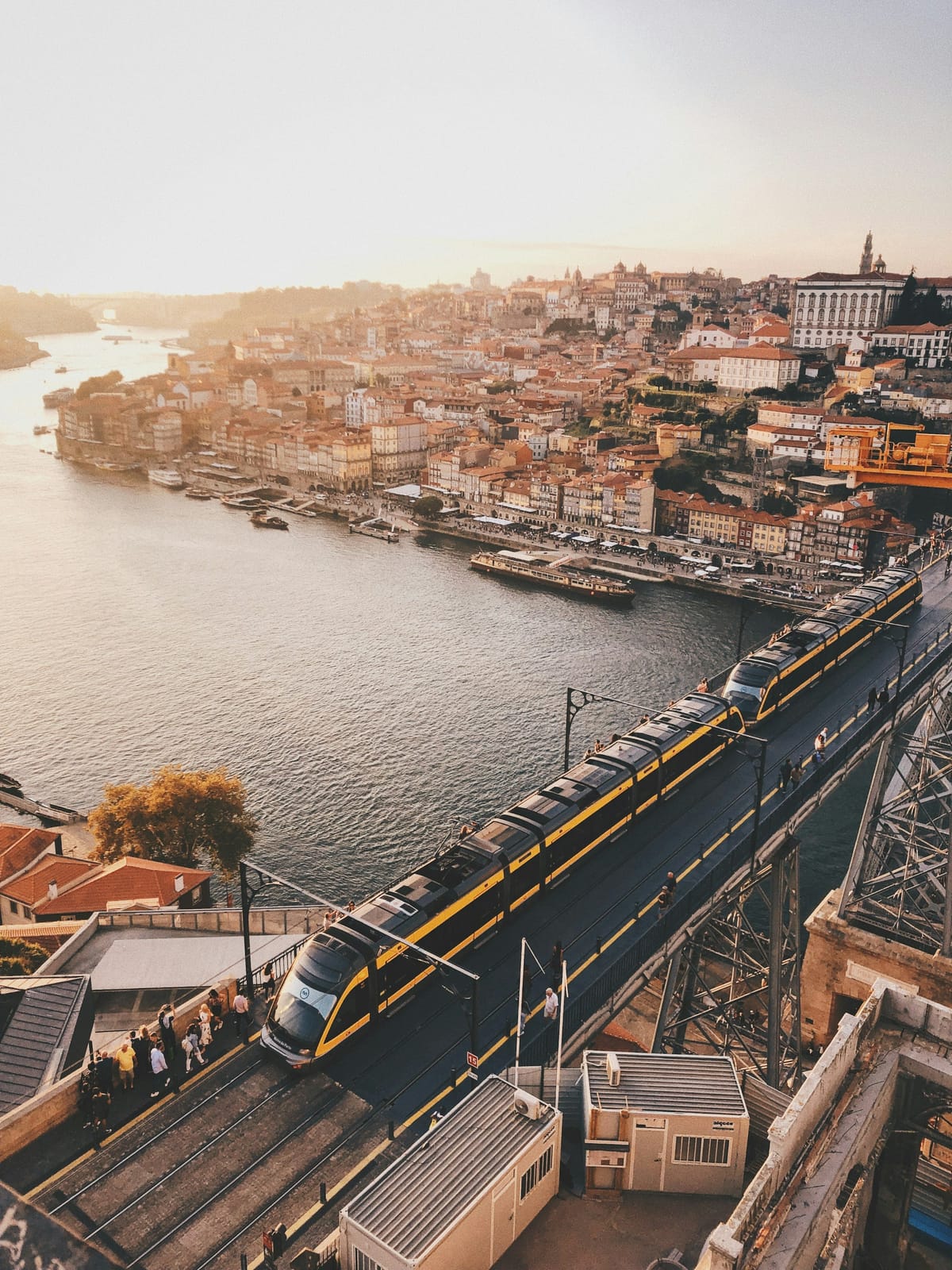
| 4 | Porto | First-class train to Porto (3 hours), check-in to historic centre, evening walking the Ribeira and Dom Luís bridge |
| 5 | Porto | São Bento Station tiles, Lello Bookshop, Cathedral and Clérigos Tower, São Francisco Church, optional port wine tasting |
| 6 | Porto & Douro Valley | Full-day Douro Valley: Amarante, Régua, vineyard lunch at Quinta do Seixo, Pinhão, evening return to Porto |
| 7 | Porto | Final morning at leisure, private transfer to airport |
Lisbon: three days
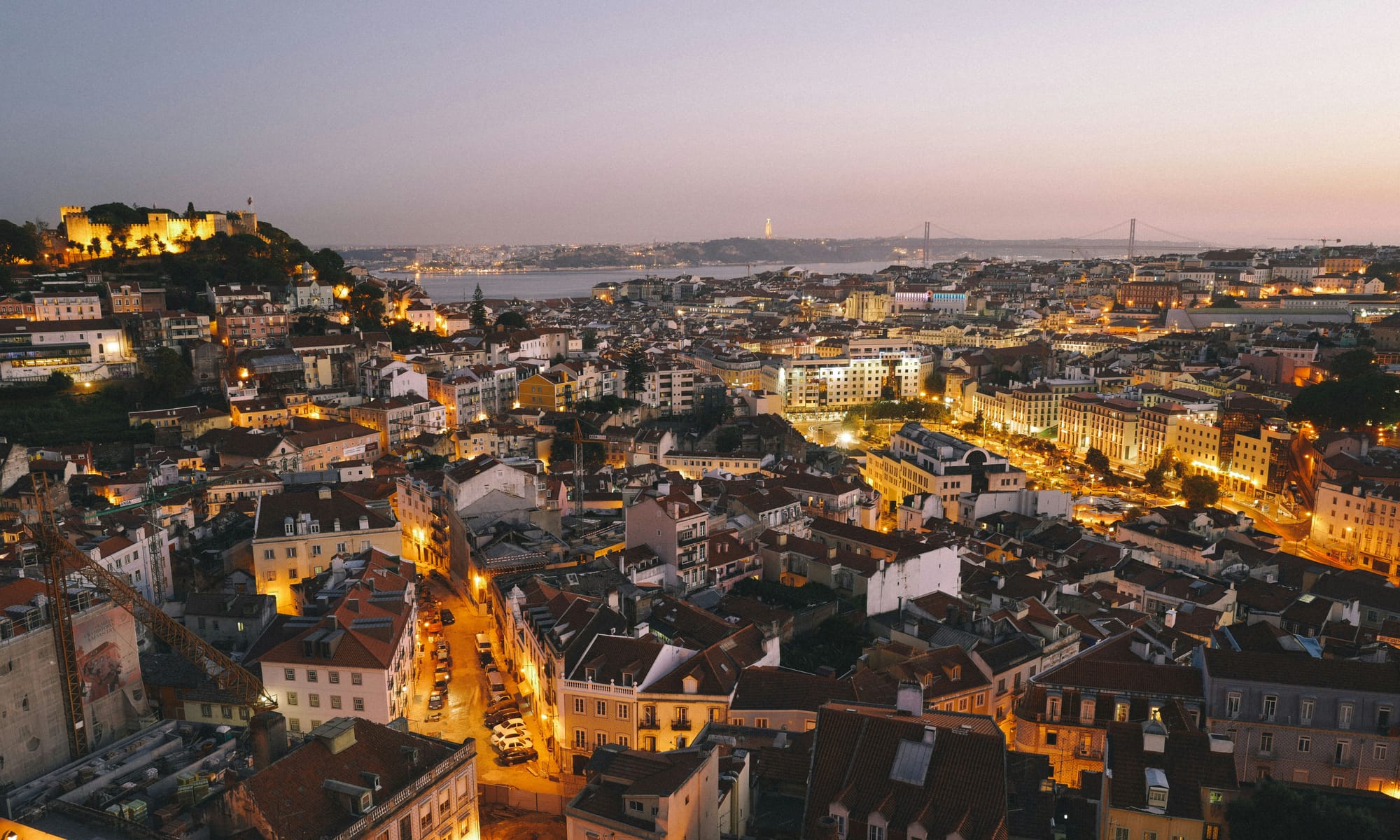
Your private driver meets you at Humberto Delgado Airport and carries you into the city along the broad sweep of the Tagus — your first encounter with Lisbon light, silver-gold and softer than almost anywhere else. Settle into your hotel in the historic centre, then wander at dusk. The Miradouro da Graça is perfect for vinho verde as the city spreads below in terracotta and tiles. Or stroll Mouraria where fado drifted from open windows before it became famous.
Day two unfolds through layers. Your guide leads you through Alfama (Lisbon's oldest quarter, a labyrinth of alleys and hidden squares), then up the Bairro Alto funicular for panoramic views, down through Chiado (where Pessoa ordered brandy daily at his usual café) and into Baixa (the perfect grid rebuilt after the 1755 earthquake). You'll visit the Sé Cathedral, cross into Commerce Square overlooking the Tagus, touch four centuries of Lisbon without rushing any of it. The afternoon is free — the National Tile Museum, São Jorge Castle, or simply another pastéis de nata while the city goes about its life.
Day three is Sintra — a full day. Forty minutes west, the Serra de Sintra rises from the plains in granite and ancient forest, its ridgelines bristling with the Pena Palace's domes, battlements, and canary-yellow walls rising above the treeline. Explore its terraced gardens where mist comes and goes. Return through Belém — the maritime quarter where Portugal's age of discovery began — to see Jerónimos Monastery (whose Manueline carved stone celebrates the sea with ropes, coral, and armillary spheres) and the Tower of Belém at the river's mouth. End with pastéis de nata from the place where the secret recipe has been locked away since 1837.
Porto: three nights (including Douro Valley day)
The first-class Alfa Pendular carries you north for three hours through Portuguese countryside, the landscape shifting from Ribatejo plains to green river valleys to the Atlantic approaching. Arrive at Campanhã station, transfer to the historic centre, and spend your evening wandering. The Ribeira waterfront is alive with restaurants and wine bars. The Dom Luís bridge's lower deck (a pedestrian walkway 45 meters above the river) is worth a traverse at dusk. The azulejo-tiled alleys lead you uphill to sudden vistas.
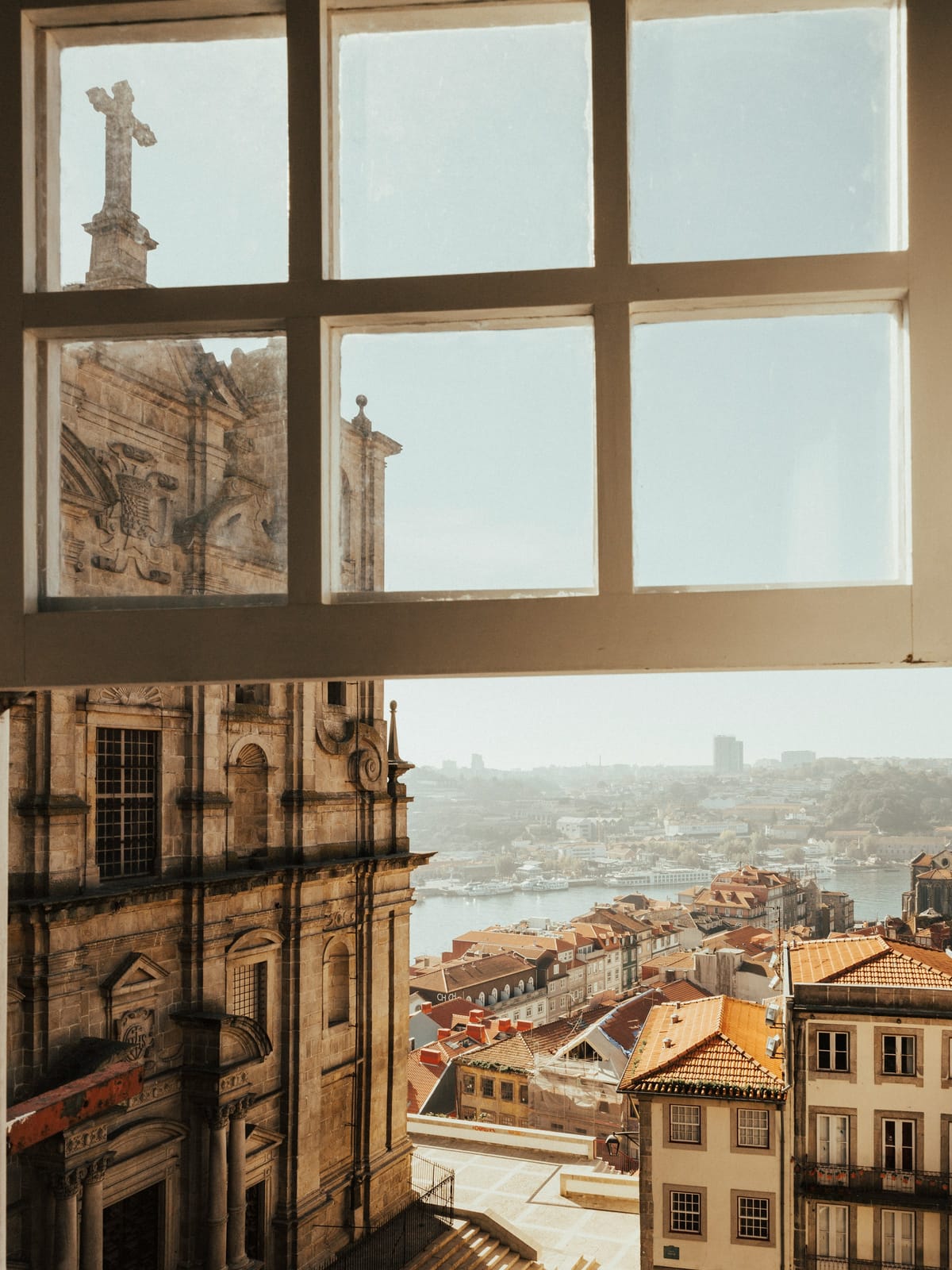
Day five reveals Porto's treasures. Your native guide takes you through São Bento Station — its entrance hall lined with 20,000 azulejo tiles depicting Portuguese history in sweeping panoramic scenes, quite possibly the most beautiful train station in the world. Lello Bookshop's neo-gothic interior with its dramatic wooden galleries and sweeping staircase. Porto Cathedral on its granite promontory. São Francisco Church, whose interior is so thick with gilt carving that the stone beneath has disappeared. Free afternoon for port wine tasting in Vila Nova de Gaia or wandering the Bolhão market where fishmongers hawk their catch.
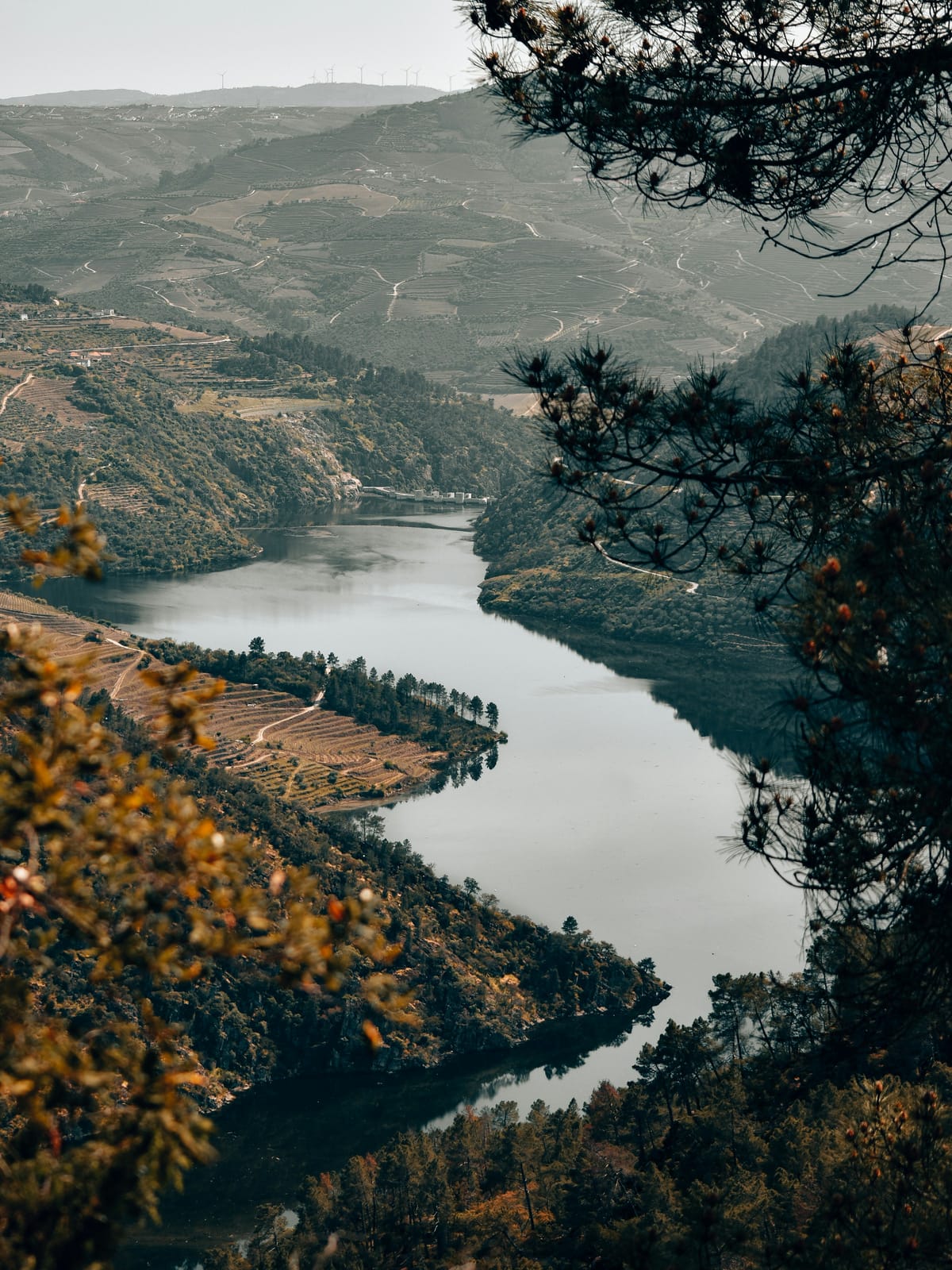
Day six belongs entirely to the Douro Valley. Your driver and guide head east, the road climbing as the city gives way to the first terraced vineyards. At Amarante, a handsome riverside town whose medieval bridge is reflected in water below. Deeper into the valley to Régua, where terraces become steeper with every bend. At the renowned Quinta do Seixo overlooking the vines, a winemaker leads you through the cellars and pours a tasting paired with vineyard lunch — wines that taste of sun-warmed stone and wild herbs. Continue to Pinhão, the valley's most picturesque village, whose tiny railway station is a gallery of azulejo tiles depicting harvest scenes. The drive back to Porto in evening light, terraced hillsides catching the last sun, is a visual memory that stays.
Where to base yourself
Lisbon: The historic centre — Alfama, Chiado, or downtown near the Tagus waterfront. These neighborhoods are walkable, close to the sights, and genuinely lived-in. Avoid the generic business districts. Porto: The Ribeira district, steps from the waterfront and the key historic sights. The atmospheric medieval lanes reward wandering. Anything in the historic centre works; anything outside is a taxi ride from the life of the city.
Ways to adjust the itinerary
Shorter trip? Drop Sintra (day trip from Lisbon is still possible) and add an extra night in Lisbon or Porto. Add a smaller Portuguese city? Coimbra (with its baroque library) is between Lisbon and Porto; Évora (Roman temple and medieval town) is between Lisbon and the south. Stay longer in the Douro Valley? Overnight in a wine estate rather than day-tripping from Porto. Skip museums? Use free time for neighborhood wandering, longer lunches, markets, and cafés. Add food and wine? Include a fado dinner in Lisbon, a cooking class, or additional tastings in the Douro.
How we plan it
We build this route around your exact dates, arranging private guides who know their cities like locals, skip-the-line access at major sights, and the kind of restaurant recommendations that point you toward tascas and wine bars where locals actually eat. We book the first-class train so you travel with a window seat and no commuter crowds, handle all transfers, suggest optional add-ons like fado dinners and quinta tastings, and ensure your hotels sit in the neighborhoods where Lisbon and Porto actually live. One real person on our team stays reachable throughout and follows up afterward to hear which moment from your week stayed longest.
Frequently asked questions
Is seven days enough for Lisbon, Porto, and the Douro Valley?
Yes. Three nights in each major city gives you time to see the main sights, explore neighborhoods, and breathe without the exhaustion of daily moves. The first-class train is easy and civilized. One full-day Douro excursion is sufficient to understand the valley's beauty.
Can I do this trip in 4–5 days?
Possible but rushed. You'd either stay three nights in one city and one night in the other, or do multiple train journeys in a few days. Better to choose Lisbon or Porto and stay four nights, or cut the Douro Valley and focus on both cities. Seven days is the minimum to avoid feeling pressured.
Should I fly into Lisbon and out of Porto?
Yes. This open-jaw routing is natural, offered by most carriers, and eliminates the need to backtrack. It flows geographically from south to north.
How long is the train journey from Lisbon to Porto?
Three hours on the first-class Alfa Pendular. It's a civilized, scenic journey — considered one of Europe's best train rides. You depart from central Lisbon and arrive in central Porto, no airports involved.
Is one day enough for the Douro Valley?
One full day works — you see the landscape, visit a quinta, taste the wines, and understand why the region is UNESCO World Heritage. Overnight in a wine estate is nicer if you have extra days, but a day trip from Porto is sufficient.
 Quick cookie chat