
The route at a glance
This 2 week France itinerary runs from Paris to the Riviera in four stops: Paris (4 nights), Lyon (2 nights), Avignon (3 nights) and Nice (4 nights). You fly into Paris and out of Nice, so you never double back. Almost every move is by TGV. The one day trip out of Paris, to Monet's garden at Giverny, is a short drive.
The train legs are short. Paris to Lyon takes about 2 hours on the TGV, and Lyon to Avignon just over an hour. Avignon to Nice is the slow leg, usually with a change at Marseille and about 4 hours in total. On a private trip we often drive that stretch, so you can stop in the hill villages on the way.
This route is a different France from our 10 day France itinerary. That guide follows Paris, the Loire Valley and Provence. This one swaps the châteaux for Lyon and adds the Riviera, so it suits anyone who wants good food and coastline on the same trip. If you would rather start from a built route, Epic France covers a similar arc in twelve days, with the Loire Valley in place of Giverny.
2 week France itinerary, day by day
Each base is a full stay, not a stop on the way. Day four is the only day trip out of Paris. Day thirteen is left open on purpose.
| Day | Base | What you do |
|---|---|---|
| 1 | Paris | Private transfer from Charles de Gaulle to Saint-Germain-des-Prés, afternoon in the Luxembourg Gardens, dinner in a Left Bank bistro |
| 2 | Paris | Louvre with an art historian in the morning, the Tuileries, then the Musée d'Orsay for the Impressionists |
| 3 | Paris | Versailles early, before the afternoon crowds, then Montmartre and Sacré-Cœur at the end of the day |
| 4 | Paris (day trip to Giverny) | Monet's garden and water lilies, back in Paris for dinner |
| 5 | Lyon | TGV from Paris to Lyon Part-Dieu (about 2 hours), afternoon in the Presqu'île, Les Halles Paul Bocuse |
| 6 | Lyon | Vieux Lyon and its traboules, funicular up to Fourvière hill, lunch in a bouchon, free evening |
| 7 | Avignon | TGV south to Avignon (just over an hour), walk the ramparts, Palace of the Popes |
| 8 | Avignon (Luberon) | Gordes, Sénanque Abbey and its lavender, Roussillon, lunch on a terrace at Bonnieux |
| 9 | Avignon (Arles or Pont du Gard) | Roman arena and Van Gogh's streets in Arles, or the Pont du Gard aqueduct, then a quiet evening |
| 10 | Nice | Train or private drive along the coast to Nice (about 4 hours by train, usually with a change at Marseille) |
| 11 | Nice | Matisse and Chagall museums in Cimiez, Vieux Nice and the Cours Saleya market |
| 12 | Nice (Riviera villages) | Saint-Paul-de-Vence, the Maeght Foundation, Èze above the sea |
| 13 | Nice | Free day: Monaco by train (about 25 minutes) or the beach, farewell dinner on a rooftop |
| 14 | Departure | Private transfer to Nice Côte d'Azur Airport |
Paris: four nights
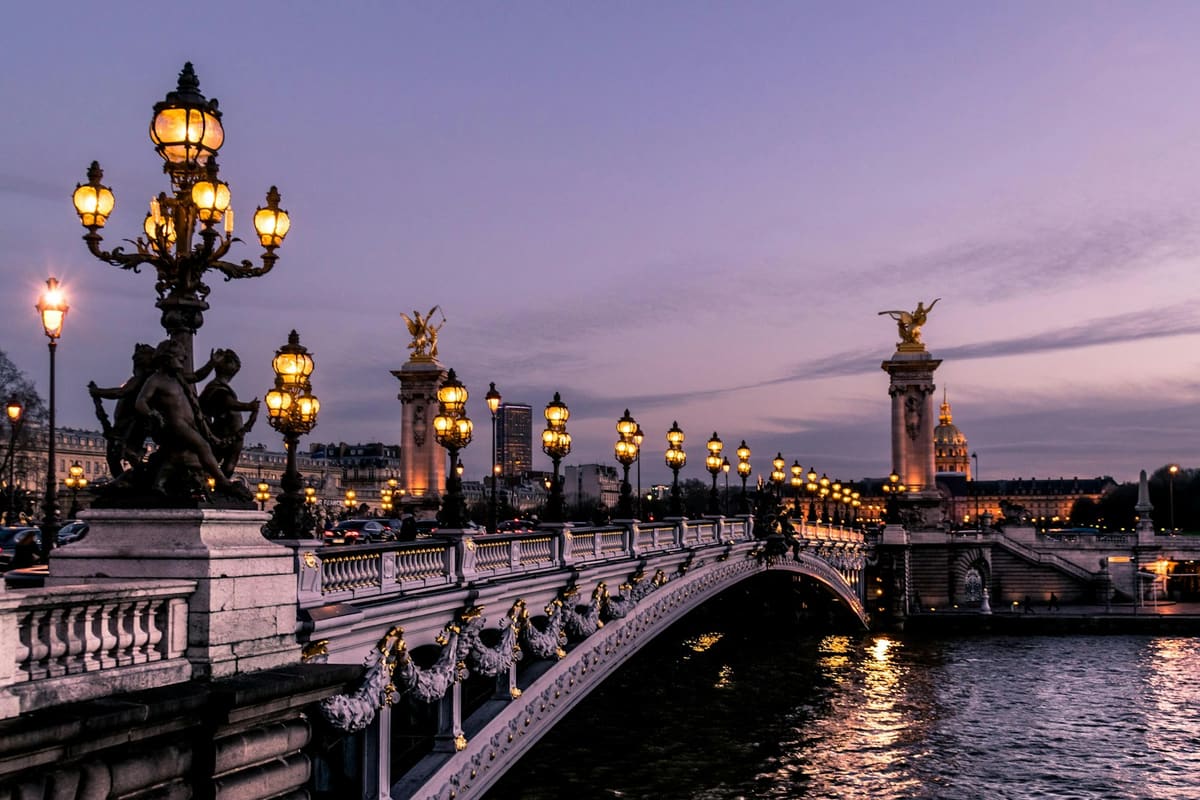
Four nights is the right amount for a first visit to Paris, and it leaves room for one day trip. Your driver meets you at Charles de Gaulle and takes you to Saint-Germain-des-Prés, the Left Bank neighbourhood where the cafés on Rue de Buci fill up by late afternoon. Give the first evening to a long dinner in a bistro. The city will do the rest.
Day two is the Louvre, with an art historian who knows which rooms to linger in and which to skip. Walk through the Tuileries afterwards, then cross the river to the Musée d'Orsay, where Monet, Renoir and Degas hang in a former railway station. The Van Gogh galleries are worth the second half of the day.
Day three starts early at Versailles, before the tour groups reach the Hall of Mirrors. Walk the gardens too, where the fountains run on set days, so check the schedule before you go. In the late afternoon, climb to Montmartre for the steps up to Sacré-Cœur and the artists' quarter. Expect to walk a lot, and to sit down often.
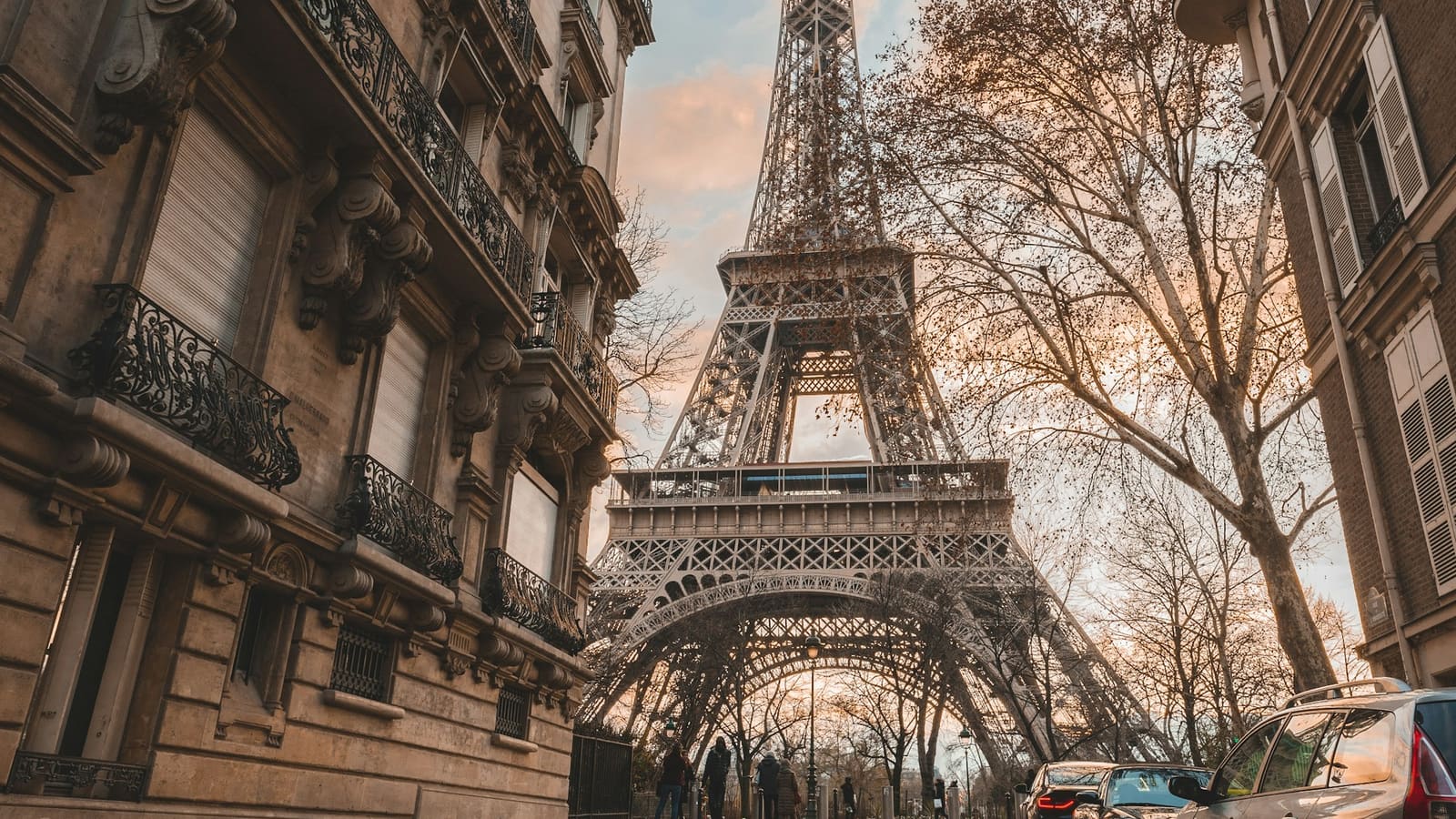
Day four is Giverny. Monet built the garden here and painted its water lilies over many years. It is about an hour from central Paris by car, and your driver brings you back in time for dinner. For a wider view of the city, see our Paris tours and Essence of France, which covers the Eiffel Tower and Versailles in seven days.
Lyon: two nights
Lyon is the stop most two-week routes skip, and it is where the food on this trip gets serious. The TGV from Paris reaches Lyon Part-Dieu in about 2 hours. From the station, a short taxi takes you to the Presqu'île, the long peninsula between the Rhône and the Saône.
Start in Vieux Lyon, the old quarter on the Saône bank. Its traboules are covered passageways that run through the old buildings, so you can cross a block without stepping onto the street. Take the funicular up to Fourvière hill for the basilica and the view over the rooftops, then walk down past the Roman theatre on the slope.
Lunch is at a bouchon, one of the traditional Lyon restaurants with checked tablecloths and a short menu of quenelles, sausage and praline tart. The portions are big and the lunch runs long. Keep the afternoon free.
Les Halles de Lyon Paul Bocuse, the covered market named after the chef who made the city famous, is the place for cheese, sausage and a bottle of Beaujolais before dinner. Dinner that night is a signature meal at one of the city's better tables, booked for you before you arrive.
Avignon and the Luberon: three nights
Lyon to Avignon is the quickest move on the route. The TGV takes just over an hour, and your driver meets you at Avignon TGV, which is out of town, for the short ride to your hotel. Stay inside the medieval walls. You walk the old town, and you drive only when you leave it.
Inside the walls, the Palace of the Popes is the highlight. The papal court moved here in the 14th century and built one of the largest Gothic palaces in Europe. Walk the ramparts at sunset, then eat a Provençal dinner of lamb, olive oil and a carafe of Côtes du Rhône.
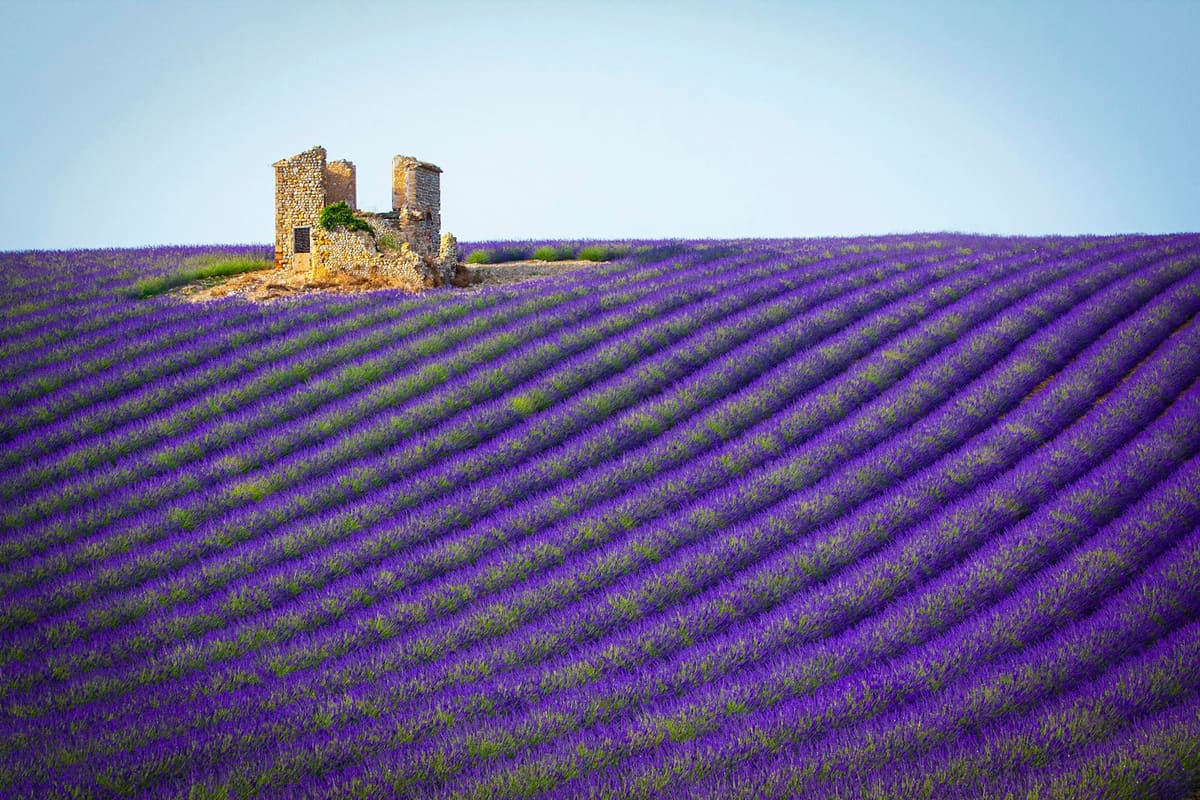
Day eight is the Luberon. Start at Gordes, where golden stone houses stack down a cliff. Drive on to the Abbey of Sénanque, a working Cistercian monastery with lavender growing in the fields around it. Roussillon's cliffs turn ochre in the light, and lunch on a terrace at Bonnieux gives you the whole valley below. For more on the south, see Provence & the Côte d'Azur and Provence.
Day nine is yours to choose. Arles is about 20 minutes by train. Its Roman arena still hosts concerts in summer, and Van Gogh lived and painted in the town in 1888 and 1889. Or drive to the Pont du Gard, the Roman aqueduct about half an hour away, which is around 2,000 years old.
Nice and the Riviera: four nights
Avignon to Nice is the long leg. By train you usually change at Marseille and arrive after about 4 hours. By private car, we drive the coast road and stop in the villages on the way, so the journey becomes part of the holiday. Either way, you finish in Nice with four nights ahead.
Give the first morning to the Matisse and Chagall museums, both in the Cimiez hills above the city. Afterwards, walk down into Vieux Nice, where the Cours Saleya market sells flowers, olives and bunches of herbs, and gelato shops sit in narrow lanes.
Day twelve is the hill villages. Saint-Paul-de-Vence is a walled village where artists still work, and the Maeght Foundation sits on the edge of it. Continue to Èze, a village on a rocky peak above the sea, and have lunch with the view over Cap Ferrat.
Day thirteen is open. Take the train to Monaco, about 25 minutes, for the Prince's Palace and the harbour, or stay on the beach. End the trip with dinner on a rooftop terrace over the Baie des Anges, where the seafood is fresh and the sky does most of the work.
Getting around by TGV
Most of the route is by train, and the main legs are quick. Paris to Lyon is about 2 hours on the TGV. Lyon to Avignon is just over an hour. Avignon to Nice is slower, usually with a change at Marseille and about 4 hours in total.
Paris and Lyon stations sit in the city, so you walk or take a short taxi to your hotel. Avignon's TGV station is out of town, so your driver meets you there. Book the Paris to Lyon and Lyon to Avignon seats early, since trains fill on summer weekends.
You will want a car only in the Luberon, where the villages are not on the train line. Your driver covers that day. Inside the cities, skip the rental car. Parking in old towns is hard to find, and walking is faster.
Where to stay
Stay in the walkable centre of each town. In Paris, Saint-Germain-des-Prés or the Marais puts the museums and cafés within a walk. In Lyon, the Presqu'île sits between the two rivers and close to the market. In Avignon, a hotel inside the medieval walls is quiet once the day visitors leave. In Nice, choose a seafront hotel on the Promenade des Anglais for the view, or a room in Vieux Nice for the atmosphere. We pick specific hotels for your dates when we plan the trip.
When to go
April to June and September to October suit this route best. Spring and early autumn bring mild weather, good light and fewer people in Paris, Lyon and on the coast. Lavender in Provence usually blooms from mid-June to early August, so June or July is the time to aim for the fields. The mistral, a strong, dry wind down the Rhône valley, can blow for several days in spring. Pack a warm layer.
August is hot inland and crowded on the Riviera. Many Parisians leave the city in August, so Paris is calmer, but some restaurants close for part of the month. For background on the country as a whole, read Visit France.
Ways to change the route
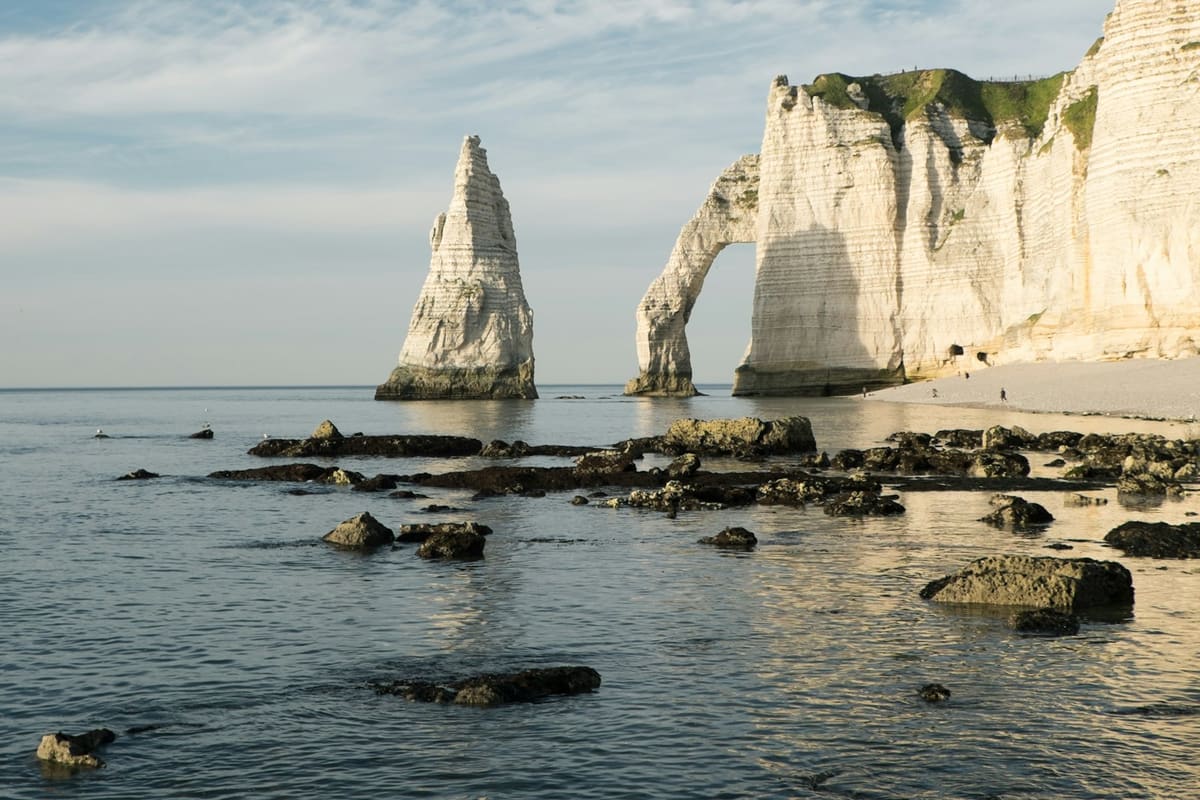
Swap the Giverny day for Normandy. Honfleur, the old harbour town, makes a good base for two nights, with the chalk cliffs at Étretat a scenic drive along the coast. Take those nights from Nice if you want to keep the length. Our Loire Valley & Normandy tour builds that route out in full.
Swap Lyon for the Loire. Paris to Tours is about an hour on the TGV, and the châteaux of Chambord and Chenonceau are a short drive from there. You give up the bouchons and gain the château country that the Paris, Loire and Provence routes are built on.
If wine matters more than the sea, Bordeaux and the Dordogne make a better second half. It works best as a route of its own from Paris, not as a swap at the end. The Bordeaux & the Dordogne tour is built around that route.
Want a slower pace? Add a night in Lyon or Avignon rather than another city. Two nights in each base is enough to settle in.
How we plan it
We build this route around your dates, and your planner stays your contact from the first email to the flight home. We book the TGV seats and the private transfers, arrange the Louvre and Versailles entries, and book guides in Paris, Lyon and Provence. The Giverny day and the Monaco trip are options, so you can drop either without a fuss.
We are a small team. We take a limited number of France trips each season and answer every one ourselves. For the full range, see all our France tours.
Frequently asked questions
Is 14 days enough for France?
Yes, for four stops at a steady pace: Paris, Lyon, Provence and the Riviera. It is not enough to see all of France. Three weeks gives you room to add the Loire, Normandy or Bordeaux as well.
What is a good route for a 2 week France itinerary?
Paris, then Lyon, Avignon and Nice. Paris gives you the museums and the city. Lyon gives you the food. Provence gives you the Luberon villages and the lavender. Nice gives you the coast. The moves between them are short and mostly by TGV.
How do you get around France for two weeks?
Mostly by TGV. Paris to Lyon takes about 2 hours and Lyon to Avignon just over an hour. Avignon to Nice is slower, usually with a change at Marseille. Use a car or a driver only for the Luberon villages, which are not on the train line.
Do I need a car for a 14 day France itinerary?
Not in the cities. You need one in the Luberon, where the hill villages are spread out and off the train line. On a private trip, your driver handles the car, the parking and the timings.
How is this different from a 10 day France itinerary?
A 10 day route usually follows Paris, the Loire Valley and Provence. This one swaps the châteaux for Lyon and adds the Riviera. Both use the TGV. Choose the Loire for château country, or this route for food and coastline.
When is the best month for a 14 day France trip?
May, June and September are the strongest months. June gives you the start of the lavender season, and September is quieter, with the grape harvest under way in the south. Avoid mid-August, when the Riviera is at its busiest.
 Quick cookie chat