
The route at a glance
Fly into Palermo, fly home from Catania. In between: Palermo (2 nights) → Syracuse (2 nights, with Agrigento on the way) → Taormina (2 nights). This 7 day Sicily itinerary covers the island's three layers in a straight line across the south and up the east coast: Arab-Norman Palermo, Greek Agrigento and Syracuse, and Taormina with Mount Etna behind it. The moves are by road and none is longer than about three hours. One week does not cover the whole island. The Aeolian Islands, Cefalù, Ragusa, Noto and the west around Trapani and Marsala are all more than a day's detour, so keep them for a longer route.
Day-by-day overview
| Day | Base | What you do |
|---|---|---|
| 1 | Palermo | Arrive at Palermo airport (about 35 minutes to the centre), evening walk through the old town and a street-food dinner |
| 2 | Palermo | Guided morning at the Norman Palace and Cappella Palatina, then the Cathedral, Quattro Canti and La Martorana; free afternoon for the markets |
| 3 | Syracuse | Drive south to Agrigento (about 2 hours), Valley of the Temples, Scala dei Turchi, then on to Syracuse (about 3 hours) |
| 4 | Syracuse | Neapolis Archaeological Park in the morning, Ortygia island and the Duomo, free afternoon on the waterfront |
| 5 | Taormina | Drive up the Ionian coast (about 1.5 hours), walking tour of Taormina and the Greek Theatre |
| 6 | Taormina | Free day: Isola Bella, a boat trip along the coast, or an excursion up Mount Etna |
| 7 | Taormina | Morning in town, transfer to Catania airport (about 50 minutes) |
Palermo: two nights
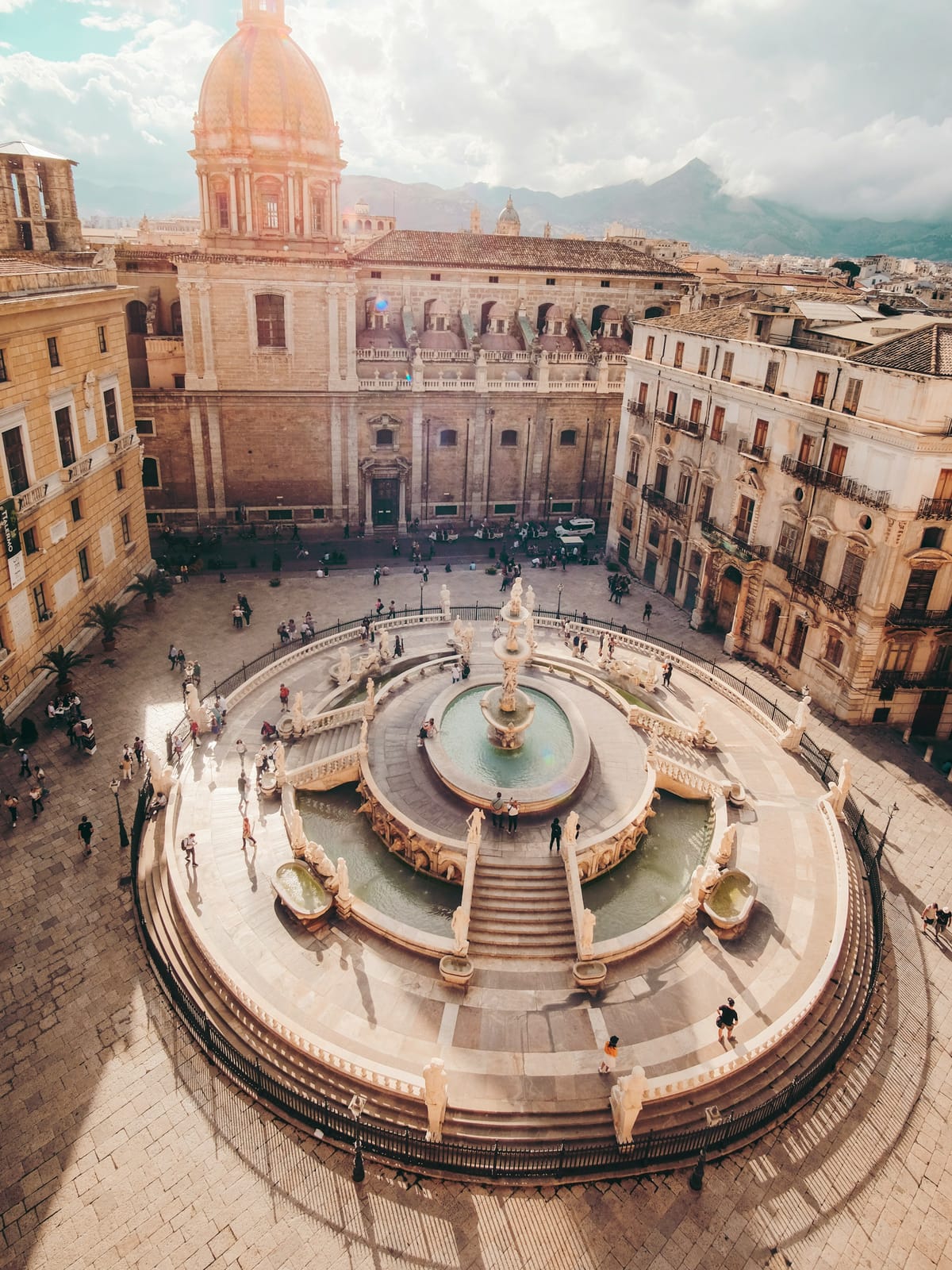
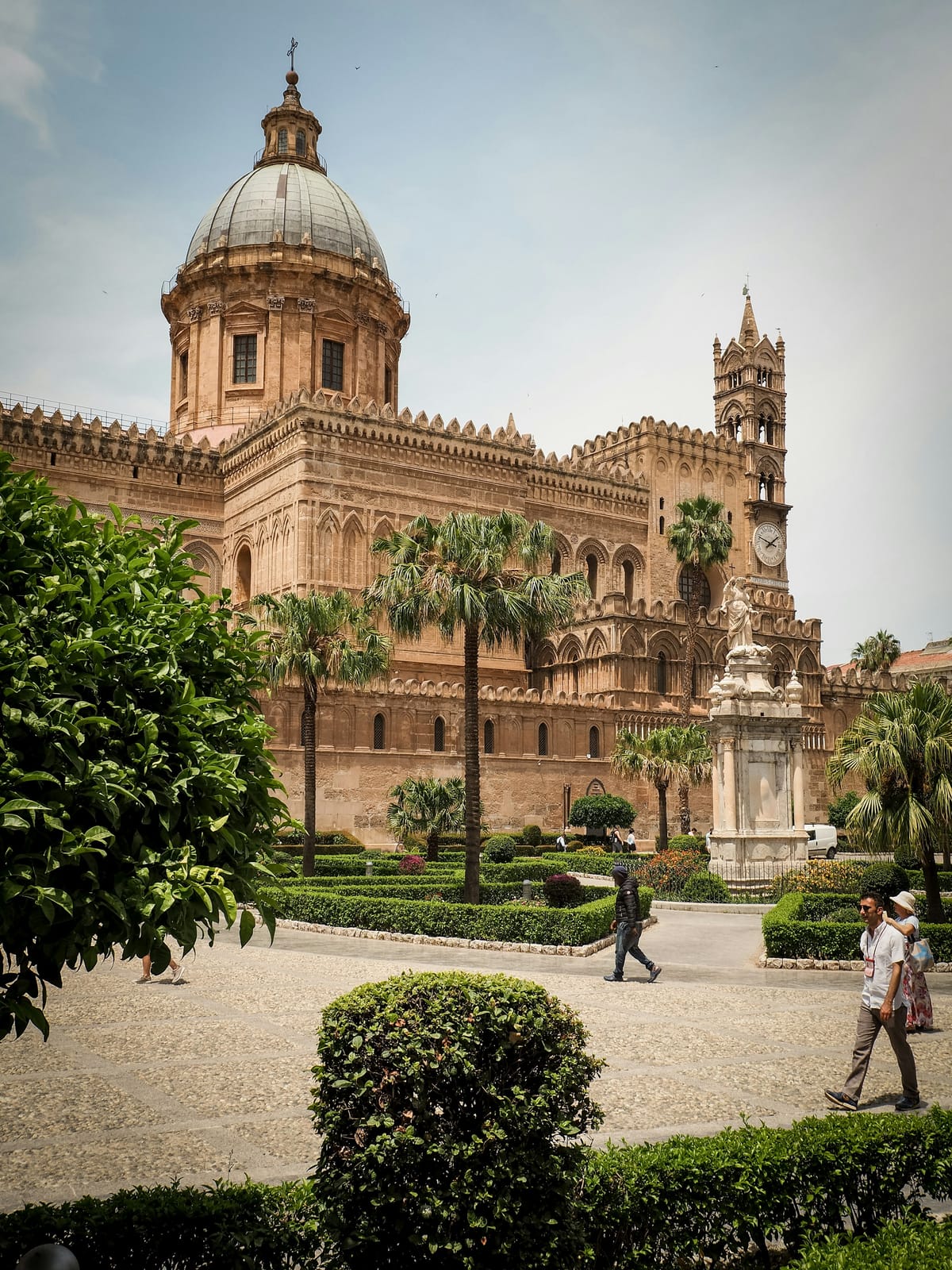
Palermo has been ruled by Phoenicians, Romans, Arabs, Normans and Spaniards, and the old town shows all of it at once. The best single hour is in the Cappella Palatina, inside the Norman Palace, where the walls and ceiling are covered in gold Byzantine mosaics and the wooden ceiling is Arab in style. A short walk away, the churches of La Martorana and San Cataldo show the same mix, with red domes that look more like Cairo than Europe.
Keep the afternoon free for the markets. Ballarò and the Capo are the two old street markets, and they are working markets first: stalls of fish, vegetables, spices and fried snacks such as panelle (chickpea fritters) and arancine (rice balls). Eating your way through them is a fair substitute for a restaurant lunch. Palermo is loud and a little rough at the edges, and that is part of why people like it.
Agrigento and Syracuse: two nights
Day three is the longest drive of the week, so it is built around two stops. Agrigento is about 2 hours from Palermo. The Valley of the Temples is a ridge of Greek temples from the 5th century BC above the sea, and the Temple of Concordia is among the best-preserved Greek temples anywhere. Go with a guide, because the site is large and the ruins make more sense with the story of the colony of Akragas behind them. After the temples, stop at the Scala dei Turchi, a white chalk cliff on the coast, then continue about 3 hours east to Syracuse.
Syracuse was once as powerful as Athens. In the morning, visit the Neapolis Archaeological Park: the Greek Theatre cut into the hillside, the Roman amphitheatre, and the Ear of Dionysius, a cave with unusual acoustics. In the afternoon cross to Ortygia, the small island that makes up the old town. The Duomo was built into the columns of a Greek temple of Athena, and you can still see them in the walls. Ortygia is mostly pedestrian, the market is in the morning, and you can swim from the rocks at the southern tip.
Taormina: two nights
The drive north from Syracuse takes about 1.5 hours, with Mount Etna (about 3,300 metres, and still active) growing larger on the left. Taormina sits on a ledge high above the sea. The Greek Theatre, rebuilt by the Romans, is the reason to come: the stage wall frames Etna and the coast, and it is still used for concerts and festivals in summer. The main street, Corso Umberto, runs through the town from gate to gate, and Piazza IX Aprile has the terrace view.
Day six has no fixed plan. Take the cable car down to the beach at Isola Bella and Mazzarò, book a boat along the coast, or ask us for an Etna excursion. Etna's upper slopes can be reached with a guide on most days of the year, though weather and volcanic activity can close the high paths, so we confirm on the morning. On the last day, the transfer to Catania airport takes about 50 minutes, and the Catania fish market is a good stop if your flight is in the afternoon.
Where to stay
Palermo: in the historic centre, close to the Norman Palace and the Cathedral, so you can walk everywhere. Syracuse: on or beside Ortygia, where the Duomo, market and waterfront are all on foot. Taormina: in the old town, close to Corso Umberto. Many Taormina hotels sit on the cliff with sea views, and the streets are steep, so ask about luggage help and the walk from the drop-off point.
When to go
April to early June and September to October are the best months. It is warm enough to swim from late May, the temples and theatres are comfortable to walk, and the crowds are smaller than in July and August. Midsummer is hot, often above 35°C inland, which makes the Agrigento day hard in the afternoon. Winters are mild on the coast, though some beach facilities close and Etna may have snow. The route works all year, and we adjust the pace to the season.
Ways to change the route
Got 8 or 9 days? Add a night in the Baroque towns of the southeast, such as Noto, Modica and Ragusa, between Agrigento and Syracuse. With 9 days or more, our Best of Sicily tour adds more of the island. Prefer a relaxed week? Cut Agrigento and stay three nights in Syracuse instead, driving there directly from Palermo. If you are keen on the volcano, swap a Taormina night for a night on the slopes of Etna. For food, add a cooking class or a wine day on the Etna slopes, where the vineyards grow on black volcanic soil.
How we plan it
We build this route around your dates: a private driver for every transfer, guides at the Norman Palace, the Valley of the Temples, Syracuse and Taormina, and hotels chosen for their position. The drive times are fixed, but the pace is not, and we shorten or lengthen days to suit you. A real person on our team is your contact from the first email to the flight home.
Frequently asked questions
Is 7 days enough for Sicily?
Seven days is enough for Palermo, the Greek sites and Taormina along one line. It is not enough to see the whole island. The Aeolian Islands, the western coast and the southeastern Baroque towns need extra days.
Should I fly into Palermo and out of Catania?
Yes. Flying into one and out of the other means you cross the island once and never backtrack. Palermo to Catania airport is about 3 hours by road, so there is no reason to return to the start.
Do I need to rent a car in Sicily?
Not for this route. A private driver covers every transfer, so you do not have to handle city-centre driving in Palermo or the limited traffic zones in Syracuse and Taormina. Sicilian driving takes some getting used to.
What is the best month for a 7 day Sicily itinerary?
May, June, September and October. The weather is warm, the sea is swimmable and the archaeological sites are comfortable to walk. July and August are hot and busy.
Can I climb Mount Etna on this trip?
Yes, on the free day in Taormina. Etna is an active volcano, so how high you can go depends on weather and volcanic activity on the day. A guide takes you as high as is permitted.
 Quick cookie chat