
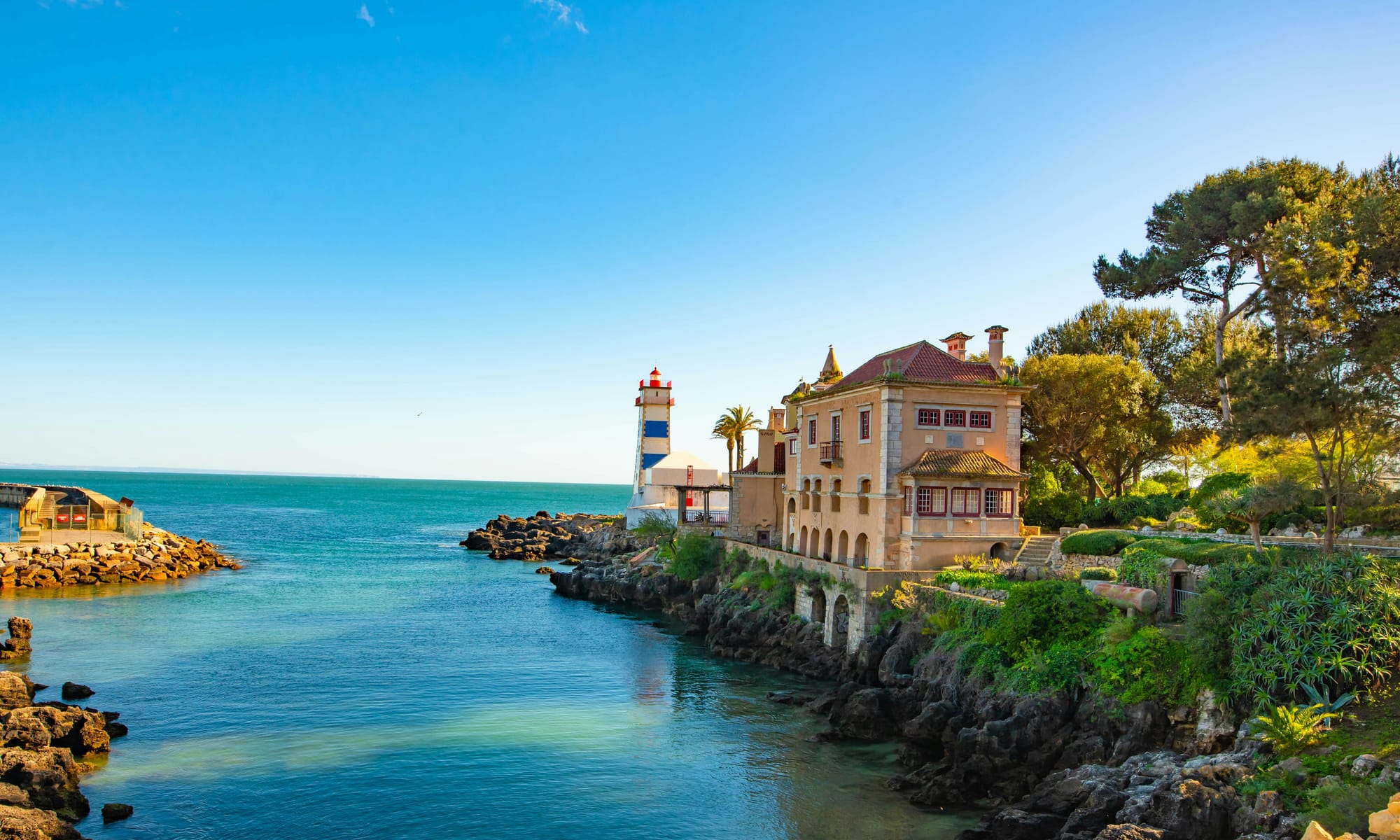
The short answer
Portugal is the Atlantic coast made livable — tea-colored tiles that cover entire buildings, a culture that still believes in afternoon leisure and long dinners, and a landscape that shifts from urban hills to terraced vineyards to wild coast in hours, not days. It's simultaneously familiar to European travelers and strangely distinct, with its own language, food traditions, and sense of tempo.
A week is perfect for a first visit. Ten days to two weeks lets you move between regions without rushing. And unlike Spain or Italy, Portugal doesn't feel overwhelmingly touristy outside the Algarve coast — the tourists go to the beaches; the travelers go to Lisbon, Porto, and the Douro Valley.
The major cities and regions
Lisbon is a city of seven hills and a thousand tiles — the Alfama's fado bars and narrow alleys where locals still sing, the Chiado's bookshops and cafés unchanged since Fernando Pessoa, Baixa's perfect grid rebuilt after the 1755 earthquake, and the Miradouros where you watch the city spread below in terracotta and light. Plan three to four days and you'll still feel like you're just learning it.
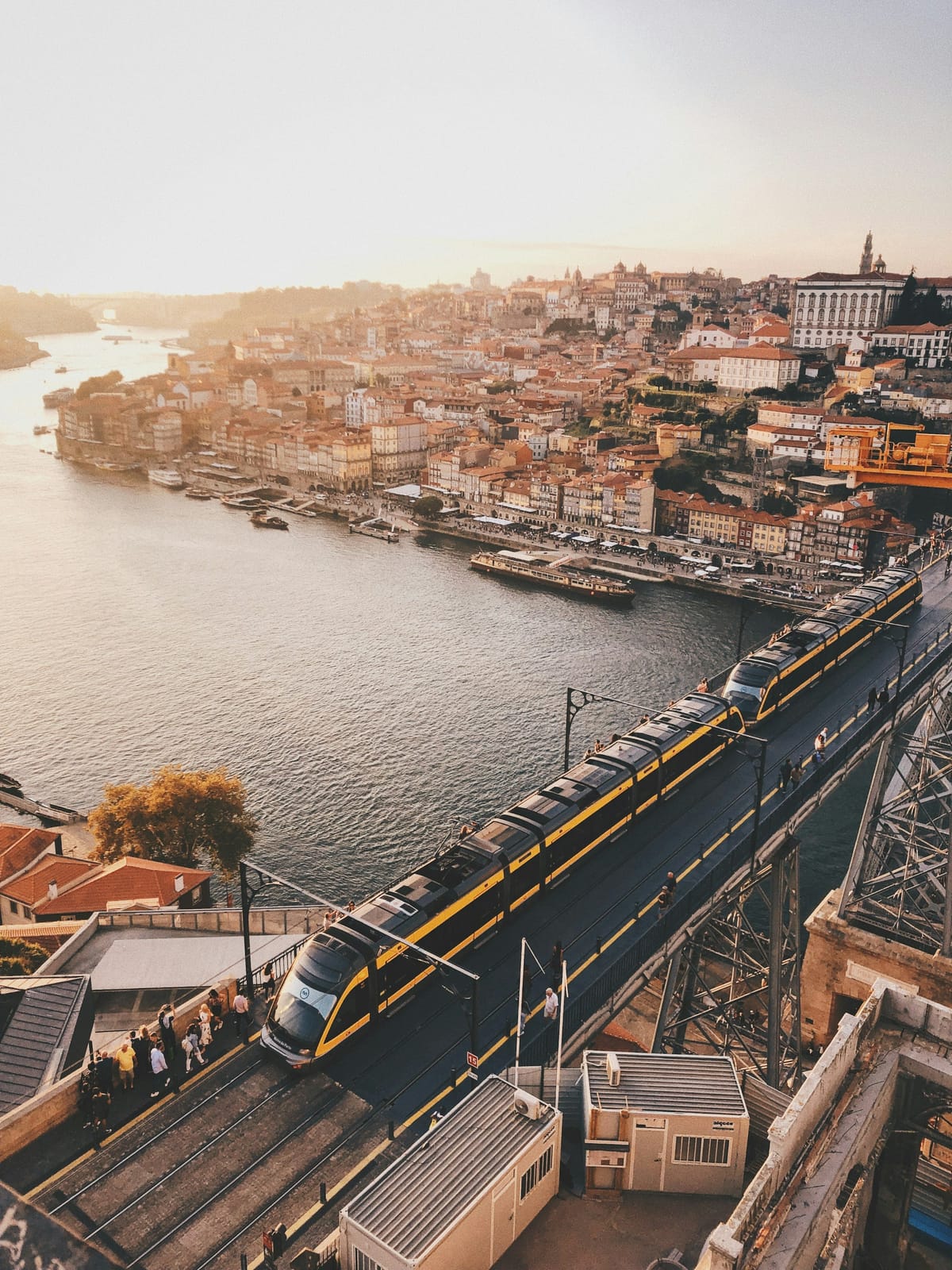
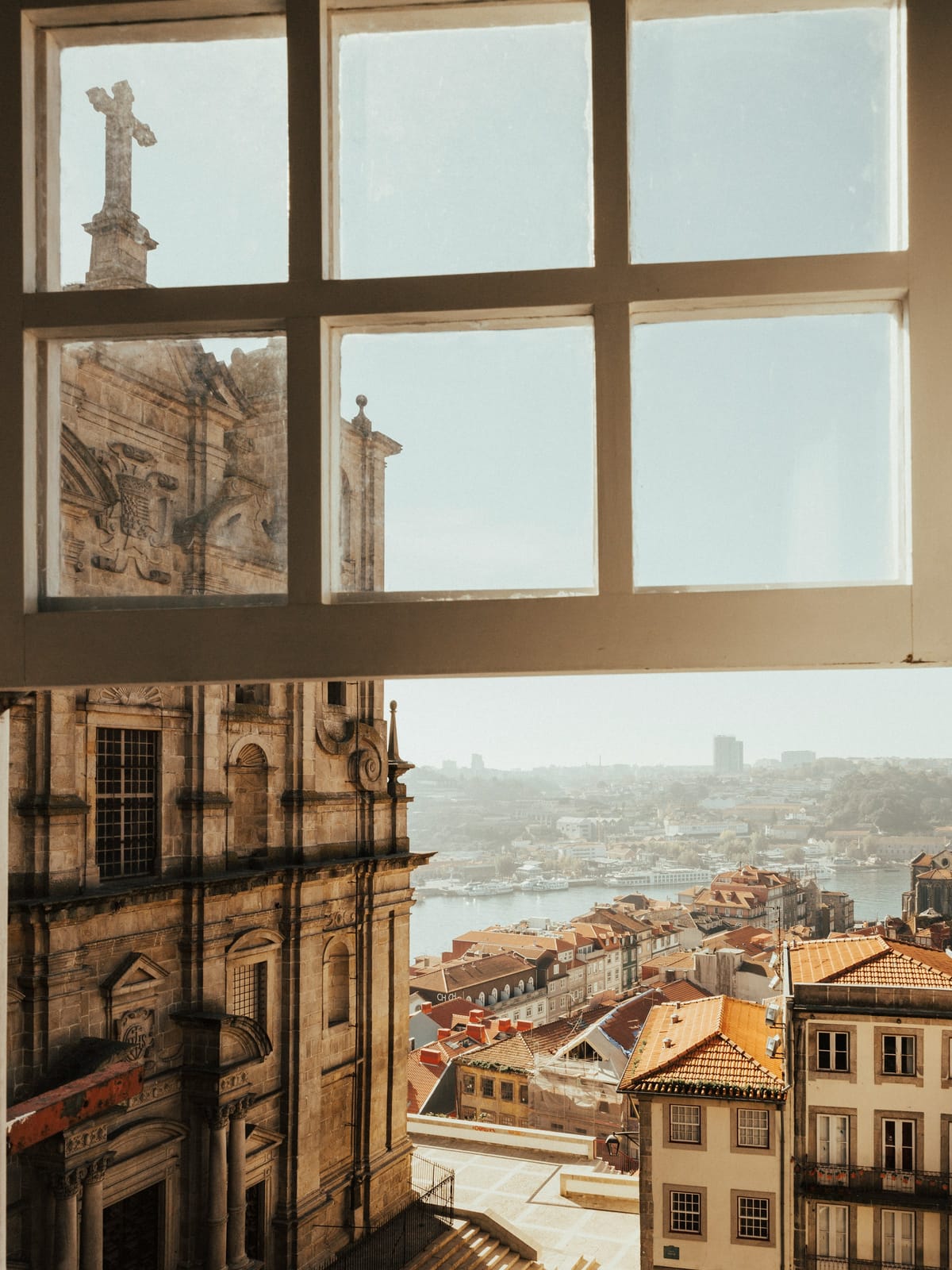
Porto is Lisbon's quieter sibling — a UNESCO riverside town where the Dom Luís bridge holds two decks (the upper one for the metro and walkers, the lower one for cars and walkers), where the Ribeira waterfront serves bacalhau à Brás at restaurants that overlook the wine-boat quay, and where the azulejo tiles at São Bento station — 20,000 of them — tell Portuguese history in sweeping panoramas. The historic centre is a tangle of lanes that reward wandering. Three days works; more is possible.
Sintra, forty minutes from Lisbon, is something else entirely — misty hilltops where the Pena Palace rises in fairy-tale towers and canary-yellow walls above the treeline. It's touristed but genuinely otherworldly. One day as a day trip works; staying overnight lets you see the palaces without crowds.
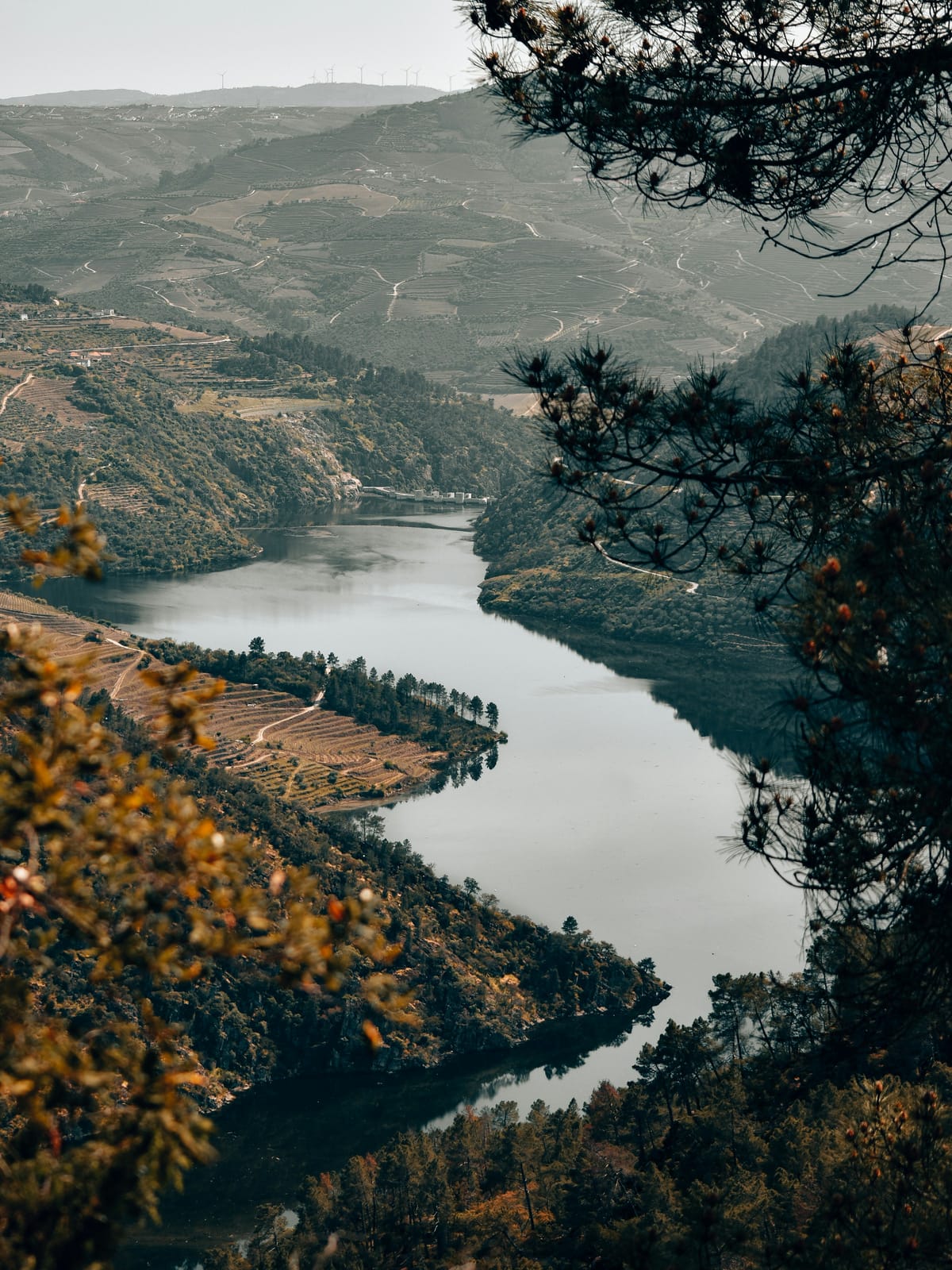
The Douro Valley is where the terraced vineyards roll away to the horizon in one of Europe's most extraordinary landscapes. A full day from Porto, the quinta wine estates offer tastings, the railway stations feature azulejo tiles, and a train ride through the valley is civilized travel at its best. Visit for the wine and landscape, stay for the peace.
The Algarve coast is Portugal's beach destination — dramatic cliffs, golden sand, and all the tourism that comes with it. If you want beaches without crowds, the coast north of Lisbon or around Porto is quieter. Outside July and August, and away from the big resort towns, the Algarve is at its best: Lagos, the Ponta da Piedade cliffs and the wild west coast near Sagres.
Portuguese food and wine
Portugal doesn't get credit for its food, which is a crime. Bacalhau (salt cod) arrives prepared a dozen ways — bacalhau com broa (with cornbread), bacalhau à Brás (fried with matchstick potatoes and olives), bacalhau à Nata (creamed). Sardines grilled whole. Custard tarts (pastéis de nata) that melt on your tongue. And the wines — Vinho Verde from the north (crisp, slightly sparkling, cheap, perfect), port from the Douro Valley (sweet and fortified, ranging from ruby-red to aged tawny), the Douro's dry reds (bold and full, tasting of the terraced landscape they come from).
Eat at a tasca (neighborhood restaurant), drink at a tasco de vinho (wine bar), and ask for the daily special — the menu is written on a whiteboard and changes with what came in that morning. Tip is not expected but a few euros is appreciated.
How many days?
| Duration | What fits | Realistic? |
|---|---|---|
| 3–4 days | Lisbon only — settle into the city and breathe | Yes, if you fly direct |
| 7 days | Lisbon, Sintra day trip, Porto and the Douro — a perfect opening | Ideal for a first visit |
| 10 days | Lisbon, Sintra, Porto, Douro Valley, and a smaller second city or more time in each | The sweet spot |
| 14 days | The above plus Coimbra, the Bairrada wine region, or Évora | Now you're discovering smaller Portugal |
| 3 weeks | Multiple regions plus slower travel, markets, cooking classes, wine tastings | Still realistic and deeply rewarding |
When to go
April through June and September through October are ideal — mild temperatures (around 20–24°C / 68–75°F), the light is generous, and the crowds are manageable. July and August are warmer but busy on the coasts; inland cities stay comfortable. The Douro Valley's grape harvest usually runs from mid-September to early October, with the golden light of autumn making it especially beautiful. Winter brings cooler temperatures and olive harvest season in November. Avoid the Algarve in August and Christmas weeks when it fills with tourists; other regions stay relatively quiet year-round.
Getting around
The first-class Alfa Pendular train from Lisbon to Porto is one of Europe's most civilized journeys — three hours through green valleys, with a dining car and comfortable seats facing outward so you watch Portugal scroll past. Regional trains connect most towns. Buses are cheap and frequent. Car rental makes sense for exploring wine regions or smaller towns, but the train system is reliable and requires no navigation. Within cities, you'll walk most of the time; the metros in Lisbon and Porto are clean and simple.
First-time mistakes to avoid
Not spending enough time in Lisbon. Most people treat it as a one-day stop en route to the beach. But the city reveals itself over days — the neighbourhoods change, the light changes, and the pace settles into you. Give it three nights minimum. Missing the Douro Valley. It's one of Europe's great landscapes and deserves a full day. Expecting everything to be as cheap as it was five years ago. Portugal has become more touristed; prices have risen. It's still good value but not the bargain it once was. Dismissing port wine as only a dessert. Tawny port over ice with a wedge of orange is a perfect evening drink. Skipping smaller towns. Évora, Coimbra, and Aveiro have charm that Lisbon and Porto, for all their greatness, can't match. Add one if you have the time.
Practical notes
Entry. US and Canadian passport holders can enter visa-free for up to 90 days. Check current rules before you travel. Currency and costs. Portugal uses the euro. A coffee at the counter costs €0.80–1.50. A glass of wine or beer, €1.50–3. A three-course meal at a regular restaurant, €20–35 per person; at a celebrated spot, €50–80. Tipping. Not expected but appreciated — leave coins at the bar, 5–10% at a sit-down restaurant if the service was good. Language. English is spoken in hotels and restaurants in Lisbon and Porto, less so in smaller towns. Portuguese is a beautiful language and a few basic phrases are warmly received. Safety. Portugal is safe in all regions mentioned here. Pickpocketing happens on crowded public transport and popular sights, but standard precautions apply.
How we plan your Portugal trip
We will match Portugal to your rhythm — whether that's a week hitting Lisbon and Porto or two weeks discovering Sintra, the Douro, and the smaller towns that guidebooks skip. We'll book the first-class train so you're not competing with commuters, arrange private guides in Lisbon and Porto who know neighborhoods locals favor, introduce you to quinta estates in the Douro that welcome visitors properly, and handle the logistics that make travel effortless. Our recommendations point toward fado bars in the Alfama, tascas where locals eat, and the kind of azulejo-tiled gems that don't appear online. We stay reachable throughout and follow up afterward to hear which moments landed deepest.
Frequently asked questions
Is Portugal good for a first-time visitor to Europe?
Yes. Portugal is manageable, friendly, less crowded than Spain or Italy, and the public transport works. The language barrier is lower than France. Seven days is perfect for a first trip; Lisbon alone deserves three nights, and adding Porto and the Douro Valley gives you a complete picture.
How many days do you need in Portugal?
Seven days is ideal — three nights in Lisbon, one or two in Sintra (day trip or overnight), three nights in Porto with a full-day Douro Valley excursion, and travel days. Shorter trips of 3–4 days work only if you stay in one city. Longer trips reveal smaller towns and wine regions.
What is the best time to visit Portugal?
April through June and September through October are ideal. September and October bring the grape harvest to the Douro Valley, and the olive harvest follows in late autumn, with golden autumn light. July and August are warm; the coast gets busy but inland cities stay pleasant.
Is it better to fly into Lisbon and out of Porto?
Yes, this open-jaw routing is natural and is offered by most major carriers. It eliminates backtracking and lets the itinerary flow from south to north.
How much does a trip to Portugal cost?
Portugal is good value compared to Spain or France. Plan €20–35 per person for a meal at a regular restaurant, €1–2 for a coffee, €15–25 per night for budget accommodation, €50–120 for a night in a 4-star hotel. A week with mid-range hotels and meals costs a little less than in France or Italy.
 Quick cookie chat