
The route at a glance
Fly into Athens, fly home from Santorini. In between: Athens (2 nights) → Mykonos (2 nights) → Santorini (2 nights), moving south through the Cyclades with no backtracking. This 7 day Greece itinerary has only two moves after Athens, both short, so most of the week is spent on the ground rather than in transit. It is the short version of our 10-day route, which continues from Santorini to Crete. Here, Crete is left out, and you finish on Santorini.
Seven days is tight for Greece. You get the Acropolis, one island for atmosphere and one for the view, and that is all. If you want the mainland as well (Delphi, Nafplio, the Peloponnese), see the end of this guide for how to adjust.
Day-by-day overview
| Day | Base | What you do |
|---|---|---|
| 1 | Athens | Arrive at Athens Airport (about 45 minutes to the center), evening walk through Plaka and Monastiraki |
| 2 | Athens | Acropolis with an archaeologist early in the day, Acropolis Museum, the ancient Agora in the afternoon |
| 3 | Mykonos | Morning ferry from Piraeus or Rafina (about 2.5 to 5 hours depending on the boat), or a 40-minute flight; afternoon in Mykonos Town |
| 4 | Mykonos | Beaches on the south coast, or a boat trip to the island of Delos, the sacred birthplace of Apollo |
| 5 | Santorini | Fast ferry south (about 2 to 3 hours), first view of the caldera from the rim at Fira or Firostefani |
| 6 | Santorini | Villages along the caldera rim, a walk from Fira to Oia, a volcanic winery tasting |
| 7 | Santorini | Transfer to Santorini Airport (about 15 minutes) for a flight to Athens and home |
Athens: two nights
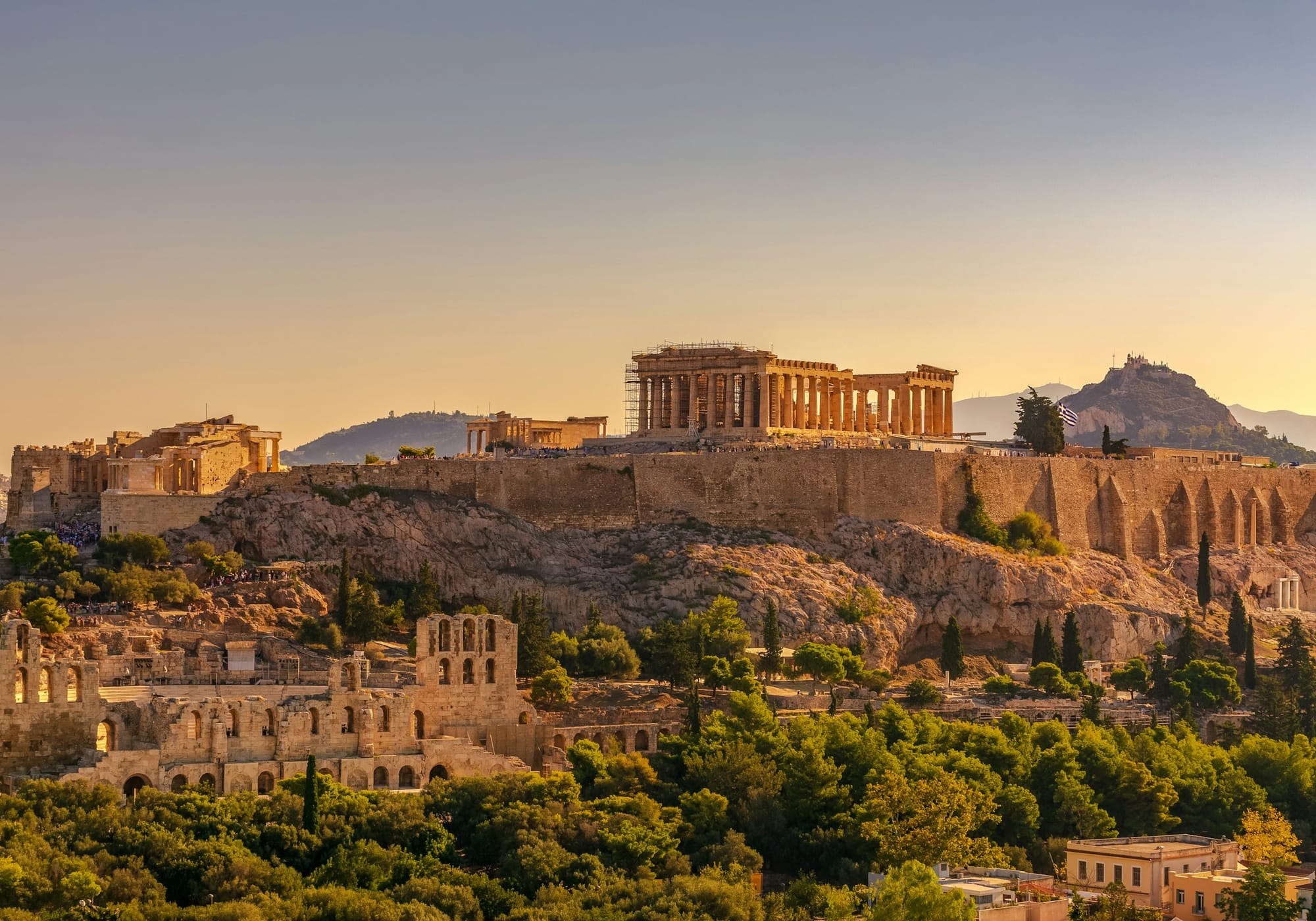
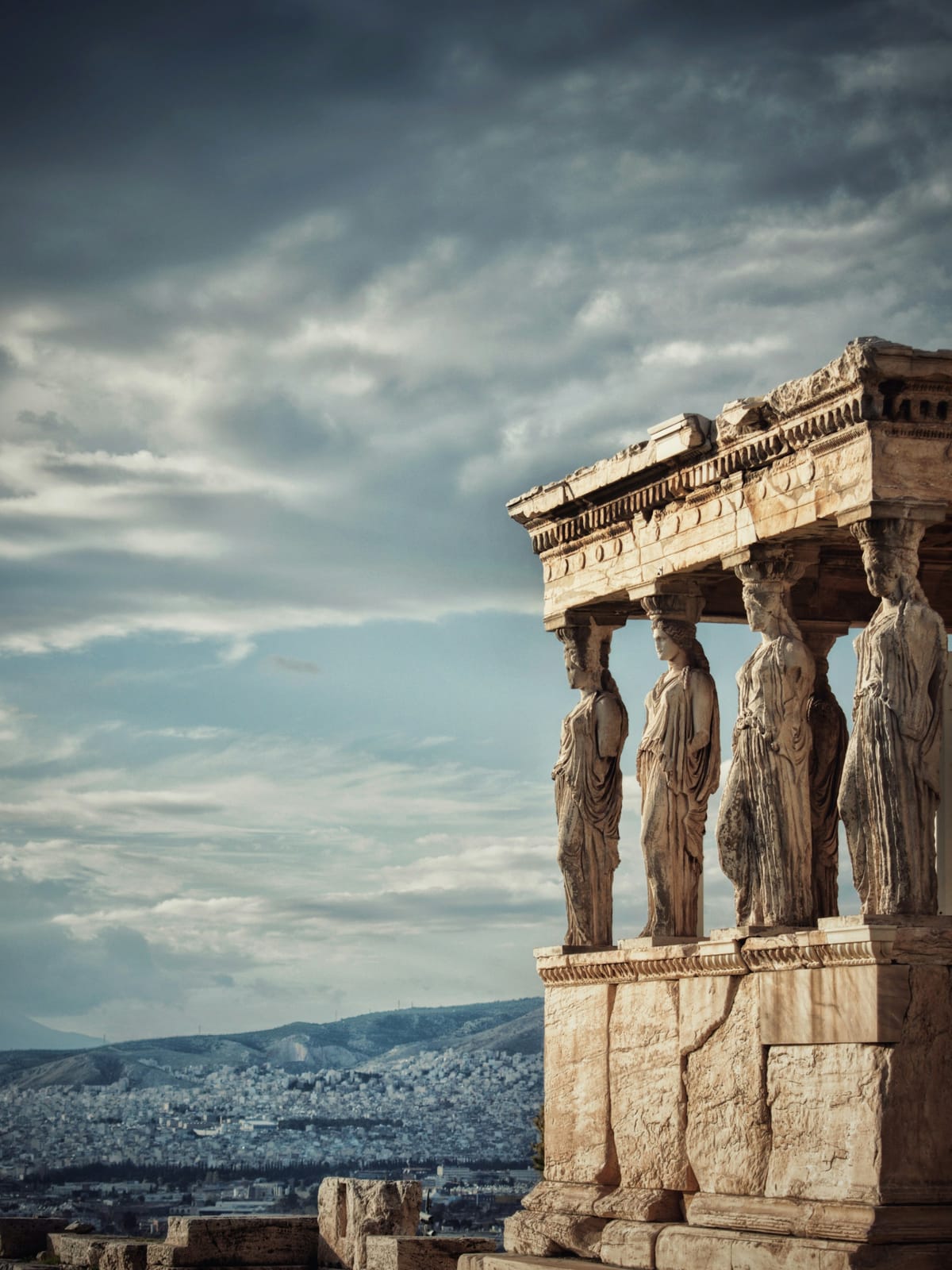
Start with the Acropolis, early. It opens at 8 am in summer, and the first hour is cooler and quieter than anything after 10. A guide who knows the site helps you see why the Parthenon matters: its columns lean slightly inward and its base curves upward, so that it looks straight to the eye. The Acropolis Museum sits at the foot of the rock, with the original sculptures and a glass floor over an excavated ancient neighborhood.
In the afternoon, walk to the ancient Agora, the marketplace of classical Athens. The Temple of Hephaestus there is one of the best-preserved Greek temples in the world. Then go up to the Plaka neighborhood for dinner. The city is more than its ruins, and Monastiraki flea market, the central market on Athinas street and the cafes of Koukaki are all within a short walk.
Athens is hot in July and August, so plan the walking for early morning and the museum for midday. The Acropolis ticket also covers several other ancient sites in the city, valid for a few days, so you can use it again at the Agora. The walk between the sites passes along Dionysiou Areopagitou, a pedestrian street that is mostly shaded and has views of the rock all the way.
Mykonos: two nights
Ferries leave from Piraeus and Rafina. The fast boats take about 2.5 hours from Rafina, and the slower conventional ferries take 4 to 5 hours from Piraeus. A short flight from Athens takes about 40 minutes and is a sensible choice if the sea is rough. The meltemi, a strong northerly wind in July and August, can delay boats, and we plan a margin for it.
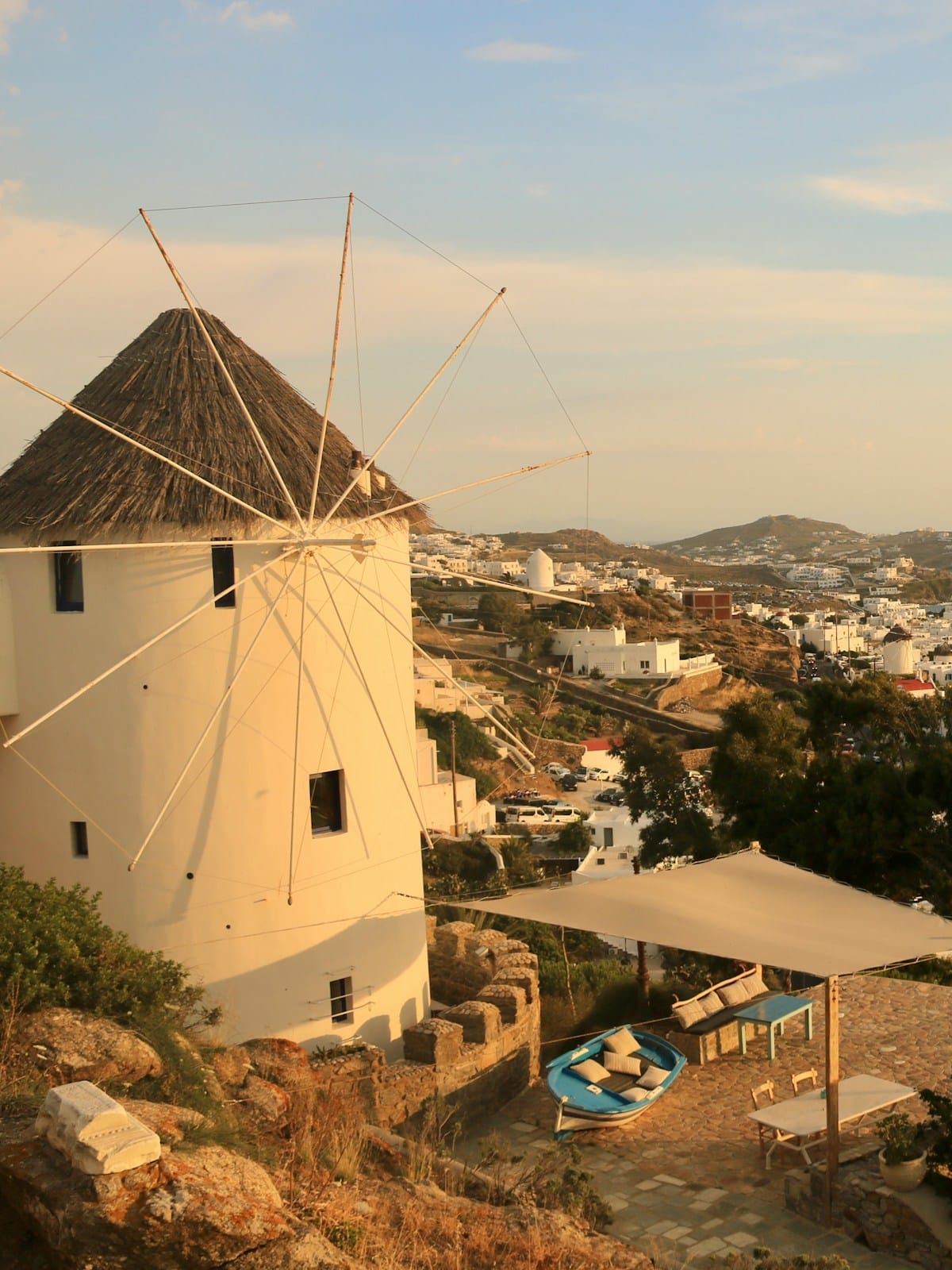
Mykonos Town is a maze of whitewashed lanes, built that way on purpose to confuse pirates. Walk to Little Venice, where old sea captains' houses overhang the water, and then up to the windmills at sunset. Beaches are spread along the south coast, from lively ones such as Paradise to the quieter Agios Sostis in the north. On day four, you can take a boat to Delos, about 30 minutes away. Delos is a UNESCO World Heritage Site and, in Greek myth, where Apollo was born. It is an open-air archaeological site with mosaics, and it is empty of residents. Take a hat and water, as there is almost no shade.
Evenings on Mykonos can be loud, with most of the clubs and beach bars at Paradise and Super Paradise. If that is not what you want, stay in the quieter part of the island and take a table at one of the harbor tavernas in town for dinner. Fresh fish, grilled octopus and kopanisti, a spicy local cheese, are the dishes to look for.
Santorini: two nights
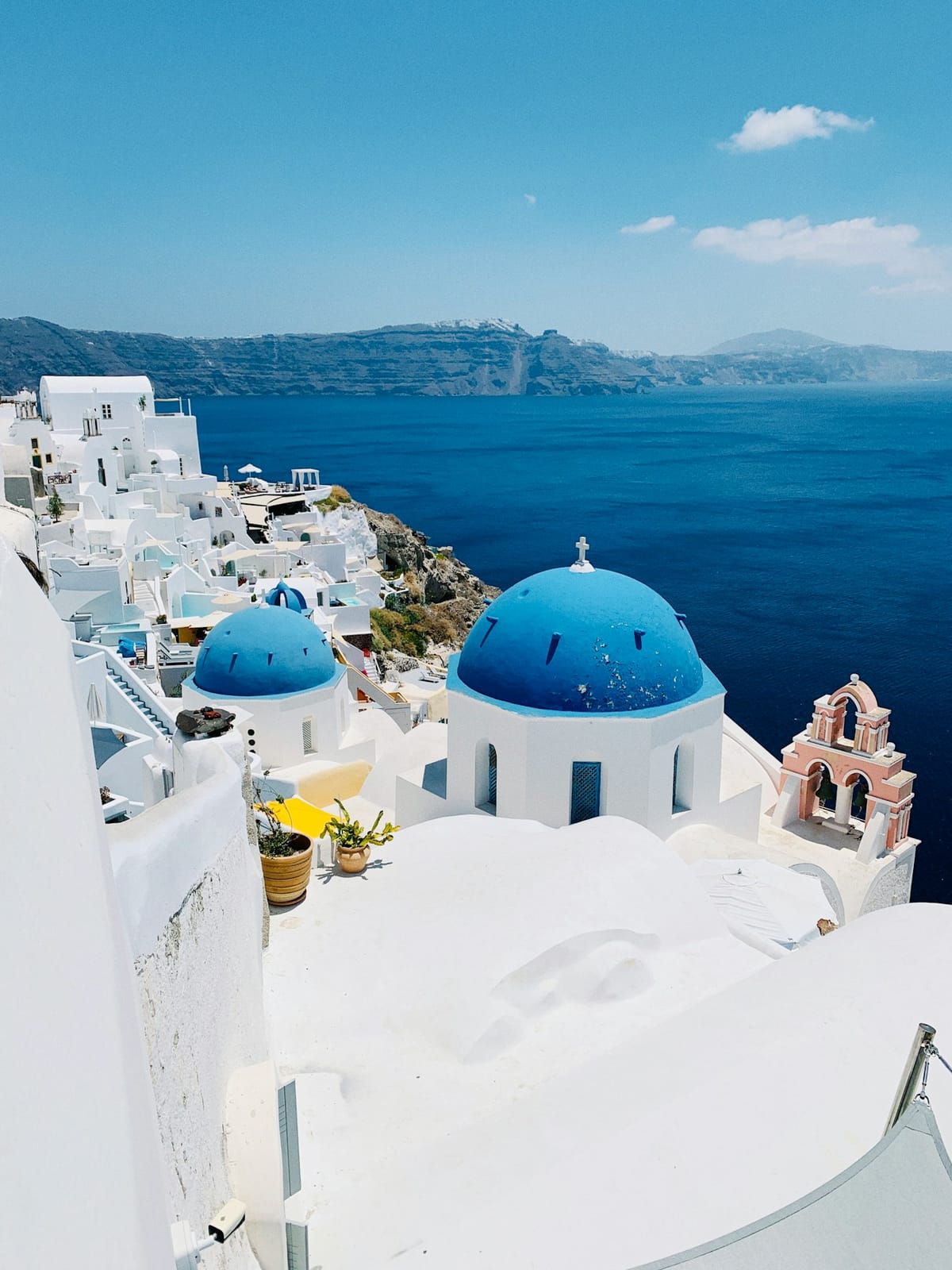
A fast ferry connects Mykonos and Santorini in about 2 to 3 hours, and you arrive at the port of Athinios, at the foot of the caldera cliffs. Santorini is the rim of a volcano that collapsed after a huge eruption about 3,600 years ago, so the island is a crescent around a flooded crater. The towns of Fira, Firostefani, Imerovigli and Oia sit along the top of the cliff. The best view is looking back from the rim, and each town has a slightly different one.
On day six, walk the caldera path from Fira to Oia. It is about 10 kilometers and takes around three hours, so start early and carry water. Or take a driver and see it by car. In the afternoon, visit a winery. Santorini's Assyrtiko grapes grow on volcanic soil, the vines are woven into low baskets to protect them from the wind, and the white wine is dry and mineral. Oia is crowded at sunset in summer, so try a table in Imerovigli or Firostefani instead.
Where to stay
Athens: Plaka, Koukaki or Monastiraki, all within walking distance of the Acropolis. Mykonos: in or just outside Mykonos Town if you want to walk to dinner, or on a south-coast beach if you want to swim first. Santorini: in Imerovigli or Firostefani for caldera views with fewer people than Oia. Rooms on the rim are cave-style, built into the cliff, and have steps rather than lifts, so ask for a ground-level room if you have heavy luggage.
Book the Santorini hotel first. Rooms with a caldera view are limited and the best ones sell out months ahead for June to September. Athens hotels are easier to find, and a short stay there means you can choose on location rather than on a view.
When to go
May, June, September and early October are the best months: warm sea, long days and fewer crowds than July and August. July and August are hot in Athens and busy on both islands, with the meltemi wind. Between November and March, many island hotels, restaurants and ferries stop or reduce service, and Santorini and Mykonos can be quiet and cold. For a winter trip, we suggest Athens and the mainland instead.
Ways to change the route
Our 10-day route adds Crete after Santorini, with the Palace of Knossos and the Heraklion archaeological museum. With only 6 days, our Essence of Greece tour stays on the mainland, with day trips to Delphi, Corinth, Mycenae and Nafplio. For 8 days, the Greek Islands tour follows the same Athens, Mykonos and Santorini route as this one, with an extra day on the islands. If you would rather skip Mykonos, replace it with Naxos or Paros, which are quieter, have long beaches and better village life, and are on the same ferry line to Santorini.
How we plan it
We book the ferries or flights, the private transfers, an archaeologist in Athens and hotels chosen for location. We check the sailing times for your dates and keep a back-up option if the wind stops the boats. One person on our team is your contact from the first email to the flight home.
Frequently asked questions
Is 7 days enough for Greece?
It is enough for Athens and two islands. It is not enough for the mainland sites such as Delphi and Nafplio as well, or for a third island. For those, plan 8 to 10 days.
How do you get from Athens to Mykonos?
By ferry from Piraeus or Rafina, which takes about 2.5 to 5 hours depending on the boat, or by a 40-minute flight. We usually recommend the fast ferry from Rafina, with the flight as a back-up if the sea is rough.
How do you get from Mykonos to Santorini?
By fast ferry, which takes about 2 to 3 hours. Sailings are daily in summer and less frequent in the shoulder season, so the ticket is booked ahead.
Is it better to do Mykonos or Naxos?
Mykonos is more polished, with a more lively evening scene. Naxos is bigger, quieter and better for beaches, hiking and village food. Both are on the ferry route to Santorini.
What is the best month for a 7 day Greece itinerary?
June and September. The sea is warm, ferries run a full schedule, and the heat and crowds are lower than in July and August.
 Quick cookie chat