When to visit Greece: the short answer
The best time to visit Greece is late May to June and September to early October. The sea is warm enough to swim, the islands are open, and the crowds are smaller than in July and August.
Greece is really three seasons. Summer is hot and busy, especially on the islands. Spring and autumn are mild and open. Winter is quiet, with Athens carrying on as normal while many island hotels close.
If you only have a week, our 7-day Greece itinerary shows how Athens and two islands fit together. For all our Greece trips, see the Greece page.
Late May, June and September: the shoulder season
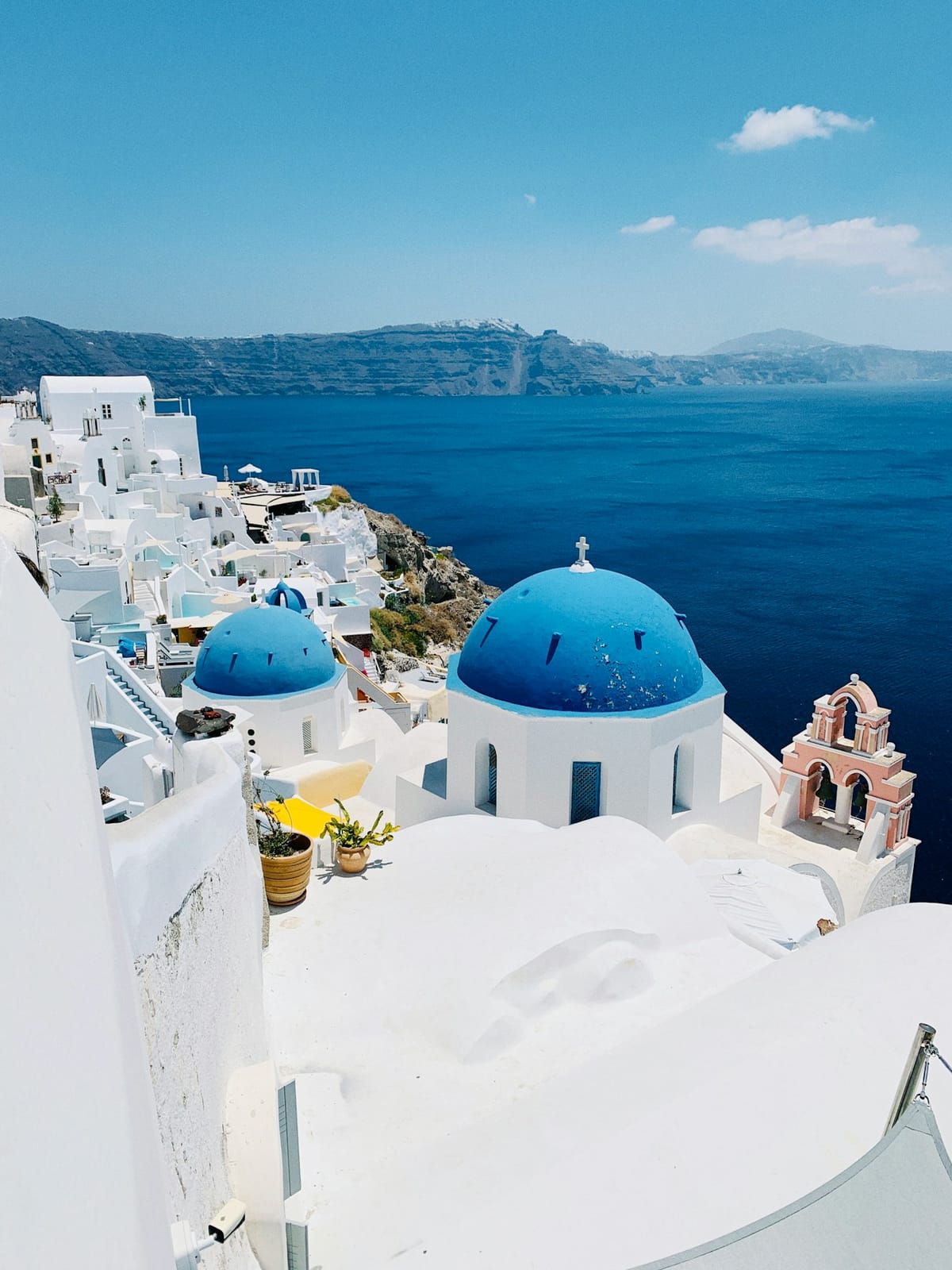
These are the months most visitors mean when they ask about the best time to visit Greece. In June, daytime highs on the islands are usually in the mid-20s°C (mid-70s°F). The evenings are warm, the days are long, and the beaches have room.
May is cooler and quieter, a good time for walking and for the ancient sites without the heat. September holds on to much of the summer warmth, and the crowds ease once school is back. Early October is mild, usually around 21°C (70°F), and the sea often stays swimmable into the first half of the month.
Sea temperatures, roughly: May around 19°C (66°F), June around 22°C (72°F), July and August around 24–25°C (75–77°F), September around 23°C (73°F), and October around 21°C (70°F). These are typical averages, and they vary by island and by year.
July and August: hot, busy and expensive
July and August are the peak. Athens is usually around 33°C (91°F) in July, and the islands fill with day visitors from the morning ferries. Hotels on Mykonos and Santorini are at their most expensive, and the best rooms sell first.
The reward is a warm sea and long evenings in harbour tavernas, with the sun setting late. If you travel in summer, start the sights early, rest through the afternoon, and consider a quieter island such as Naxos or Paros.
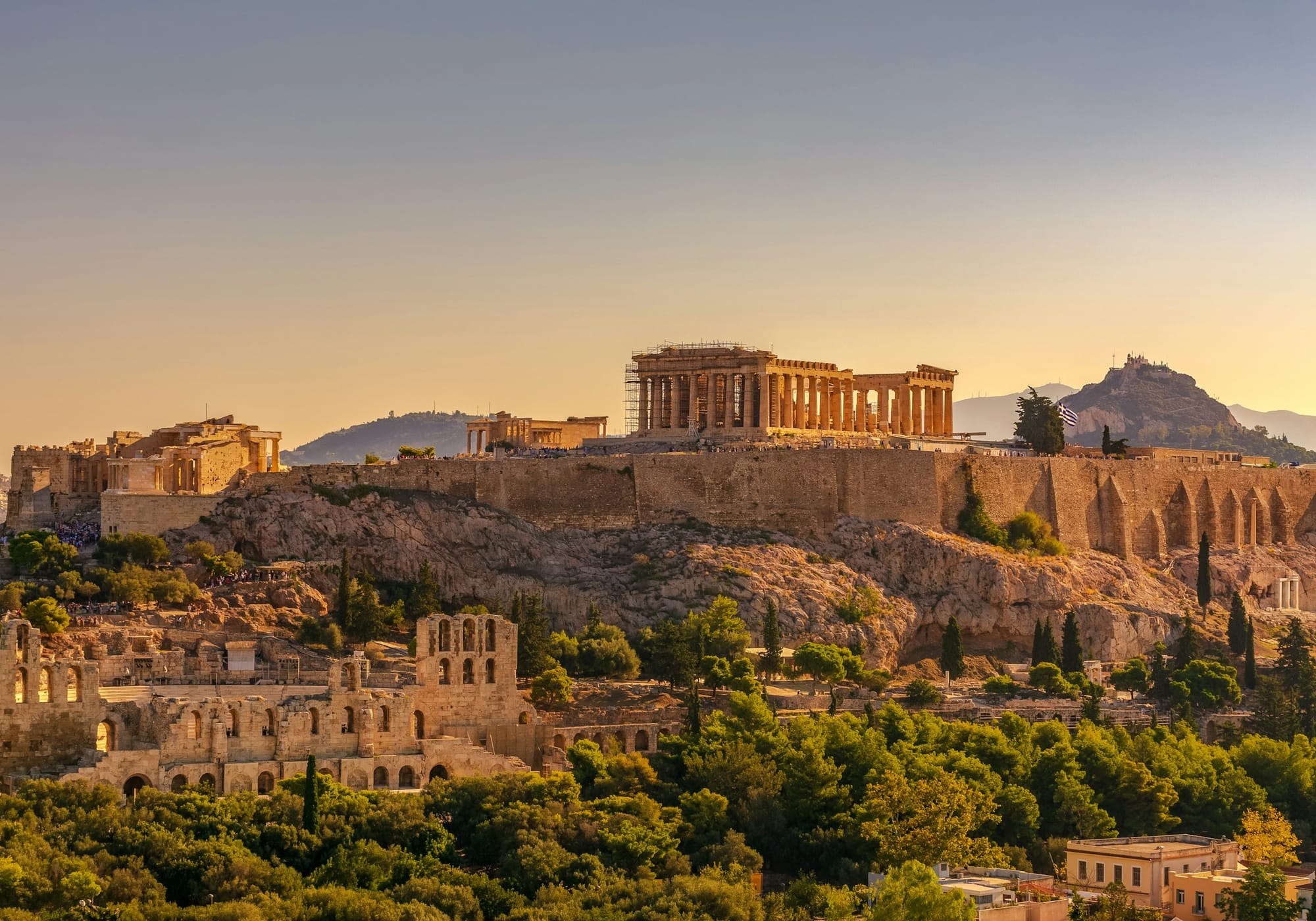
The Acropolis is at its best in the first hour after it opens, before the heat and the tour groups arrive. Plan your Athens days around that, and keep the afternoons for shade and a long lunch.
The meltemi: the summer wind
The meltemi is a strong, steady north wind that blows over the Aegean, mostly in July and August. It takes the edge off the heat on the Cyclades, and it is the reason sailing there is at its best in summer. It often eases in the evening.
The same wind can slow the ferries. Smaller boats may run late or not at all on a strong day, and the exposed north and east coasts can be rough. We build a margin into every island move in summer, and keep a back-up flight or boat in case the wind rises.
Where you can, pick morning sailings, which are often calmer than afternoon ones.
Winter: ferries thin out and islands close
From about November to March, Greece slows right down. In the south the days stay mild, around 15°C (59°F), but ferry timetables shrink and many island hotels, tavernas and beach bars close until spring. Smaller islands may have only a few sailings a week.
Rain is most likely from November to February, and the sea is too cold for most people to swim. Winter suits someone who wants ancient sites and city streets with few queues. It does not suit someone who wants a beach.
If you do go in winter, build the trip around Athens, the mainland and Crete, where more places stay open. Check the ferry timetable before you fix any island date, because a missed sailing can cost you a whole day.
Many visitors who come in the quiet months like the slower pace. Book a table in a family taverna, and a private guide for the Acropolis, and the empty streets become part of the pleasure.
Athens works in every month
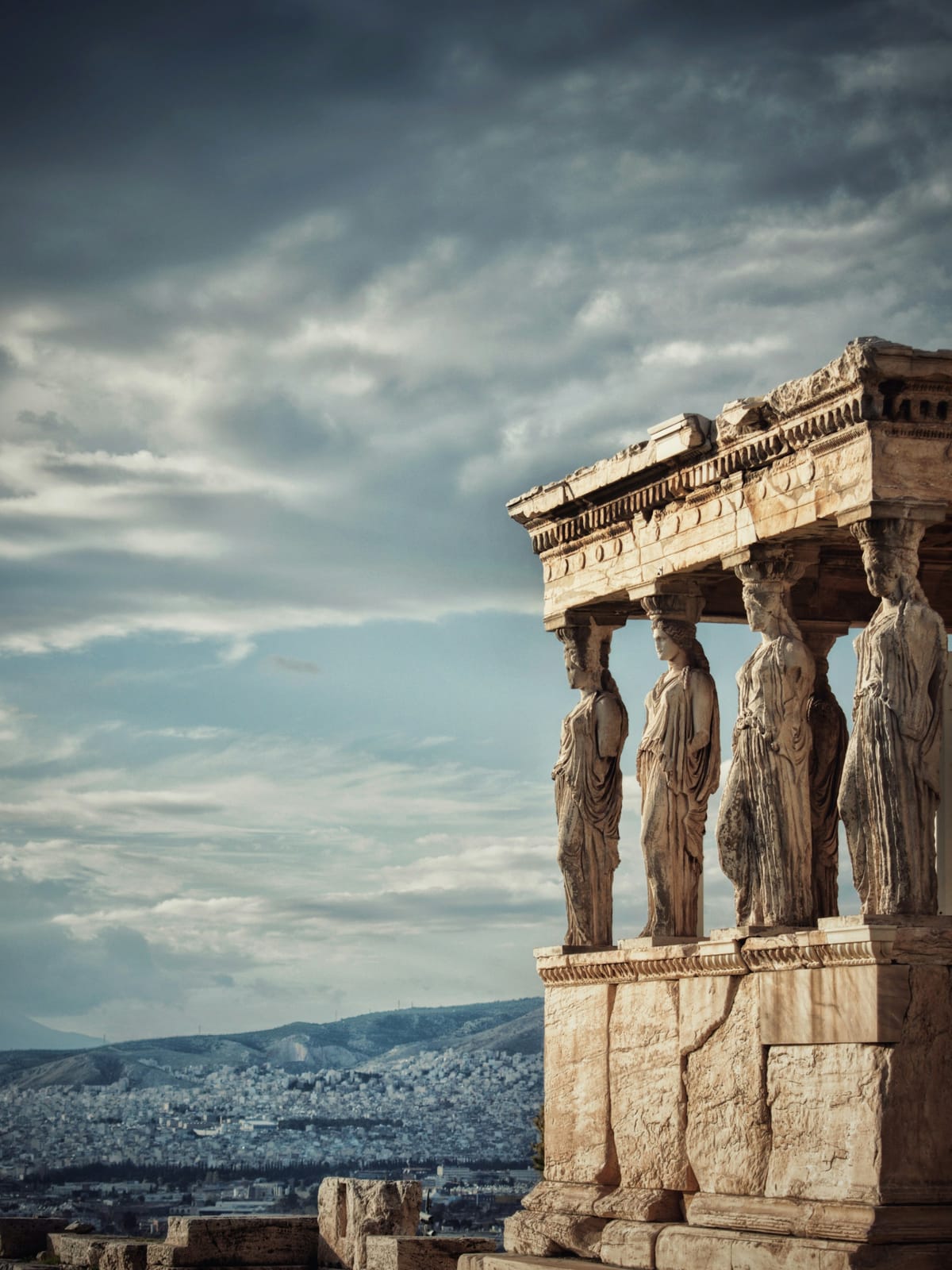
Athens is a year-round city. The Acropolis is open in winter too, with shorter hours, and the Acropolis Museum, the ancient Agora and the Plaka are there whatever the weather. In spring and autumn the walking is comfortable. In July and August, plan the climbs for early morning.
In winter the city is greyer and quieter, and some visitors prefer it that way. Walk up Lycabettus hill as the lights come on for one of the wider views of the city.
Our Essence of Greece tour runs all year. It covers Athens, Corinth, Mycenae, Nafplion and Delphi, and the cooler months make the walk between those sites far more comfortable.
Greek Easter: the big spring holiday
Greek Easter is the most important holiday of the year, and it runs on its own calendar. Greek Orthodox Easter often falls on a different Sunday from Western Easter, so check the date for your year before you book. Holy Week brings processions, and the candlelit service on Holy Saturday night is the heart of it.
Good Friday is quiet, and many shops and tavernas close. Easter Sunday is a family meal, often with lamb. Athens and the islands are busier than usual that week, so book ahead. It is worth going for the atmosphere, but it is not the time for a quiet visit.
Month by month at a glance
| Month | Weather | Crowds | Good for |
|---|---|---|---|
| January | Cool. Mild in the south, with rain on the mainland | Quiet | Athens, museums, empty ancient sites |
| February | Cool and often wet | Quiet | Athens and the mainland with few visitors |
| March | Cool, spring starting | Low | Wildflowers and the ancient sites |
| April | Mild, around 18–20°C (64–68°F) | Building, Easter peak | Athens, and Easter week for those who want it |
| May | Warm, around 22–25°C (72–77°F) | Rising | Islands opening, walking, the sea still cool |
| June | Warm, around 26–28°C (79–82°F) | Busy from mid-June | Long days, warm sea, the islands at their best |
| July | Hot, around 33°C (91°F) in Athens | Very busy | Early mornings, sea days, the meltemi |
| August | Hot, with the sea at its warmest | Peak | Sea days; plan the sites for early and late |
| September | Warm, around 26–27°C (79–81°F) | Busy, then easing | Warm sea, quieter islands, harvest season |
| October | Mild, around 21–23°C (70–73°F) | Quieter | Walking, wine, islands before the winter close |
| November | Cooler and wetter | Low | Athens and the mainland |
| December | Cool, around 13–15°C (55–59°F) | Low | Christmas in Athens, quiet sites |
It depends where you're going
Greece has very different climates. For Athens and the mainland, spring and autumn are best, and winter is perfectly workable. For the Cyclades, such as Mykonos, Santorini, Paros and Naxos, May, June and September are the golden months. For the wider picture, see our Visit Greece guide.
Crete and the far south stay warm the longest, so the season starts earlier and runs later there. Our Best of Greece tour includes Crete, and late spring or early autumn is the most comfortable time to walk the Minoan palace at Knossos.
Our Greek Islands Discovery tour covers Athens, Mykonos and Santorini, and it is set for April to October. The Ionian islands on the west coast are greener and get more rain than the Cyclades, so plan them for late spring and early autumn too.
How we plan around the season
Every Black Deer Travel trip is private, so we build your dates around the season, not the other way round. We check the ferry timetable for your month, book boats early for summer, and plan island days for the cooler hours.
Tell us when you can travel and roughly how long you have. We will say honestly which weeks suit the islands and which suit Athens and the mainland. We are a small team, so we only take on Greek trips we can plan properly.
One planner stays your contact from the first email to the flight home.
Frequently asked questions
What is the best time to visit Greece?
Late May to June, and September to early October. The sea is warm, the islands are open, and the heat and crowds are not yet at their peak. July and August are the hottest and busiest months.
Is July too hot to visit Greece?
It can be. Athens is usually around 33°C (91°F) in July. Start sightseeing early, rest in the afternoon, and save the sea for the late hours. Many people find the warm evenings are the best part.
What is the meltemi?
A strong, steady north wind over the Aegean, mostly in July and August. It can slow or cancel ferries, especially the smaller boats, so we plan a back-up for island moves in summer.
Are the Greek islands open in winter?
Many are only partly open from about November to March. Ferries run less often, and many island hotels and tavernas close until spring. Athens and the mainland stay open all year.
When is Greek Easter?
Greek Orthodox Easter follows its own calendar, so it often falls on a different Sunday from Western Easter. Check the date for the year you travel. Holy Week and Easter are busy, and many businesses close on Good Friday.
Is Athens worth visiting in winter?
Yes, if you want the Acropolis and the museums with few queues. Expect cool, sometimes wet days and shorter opening hours. The city's cafés and museums are good company when the weather turns.
 Quick cookie chat