
The short answer
Croatia is three countries in one. The capital, Zagreb, is Austro-Hungarian — coffeehouses, Baroque churches, art museums. Moving south, Plitvice Lakes is the hinge: a UNESCO World Heritage site with sixteen interconnected lakes and ninety-two waterfalls, the water a shade of turquoise that photographs badly because it looks artificial (it isn't). Below that, the Dalmatian coast: medieval walled cities — Split with its Roman palace, Zadar with its Byzantine churches, Dubrovnik with its intact walls — separated by island-studded Adriatic scenery. Most visitors choose one half; a good trip does both.
The year splits into seasons. May through early June and mid-September through October are the sweet spot — warm enough to swim (18–23°C / 64–73°F), not yet scorching. July and August are hot (28–32°C / 82–90°F) and crowded. April and late October are mild and quieter (15–20°C / 59–68°F). Winter is cool (8–12°C / 46–54°F) but Mediterranean, and most major cities stay open.
Why Croatia: What you're really visiting
Croatia was part of the Austro-Hungarian Empire until 1918, then Yugoslavia, then it was its own country — and that layering is everywhere. Zagreb looks east and west simultaneously. The Dalmatian coast bears traces of Venice, Rome, and the Ottoman empire. The stone of the coast — limestone — is identical to that used for the US Capitol and the Treasury building; you can see why quarries in Dalmatia were prized.
The most striking thing is the water. Plitvice's lakes are fed by underground springs and Karst geology (limestone dissolving and redepositing as travertine barriers), creating falls and pools that change color across the day. The Adriatic near the coast is so clear that the sea grass on the bottom is visible. The islands — Hvar, Vis, Korčula — are small enough to walk across and beautiful enough to stop every hundred metres.
The food is Mediterranean with Central European notes: black risotto (squid ink), štrukli (cheese pastry), fresh fish grilled over charcoal, truffles in the interior. Wine is serious — Dalmatian reds from Pelješac are among Southern Europe's best values.
Zagreb and Central Europe
Zagreb is the surprise of Croatia. The city that has nothing to do with the Adriatic coast and everything to do with Central Europe — Budapest and Vienna's smaller, less visited cousin. The Upper Town (Gornji Grad) sits on a limestone ridge above the Lower Town, connected by a thirty-metre funicular (the world's shortest, built in 1890, still working). The Cathedral of the Assumption of the Blessed Virgin Mary has neo-Gothic spires restored after the 1880 earthquake. Tkalčićeva Street has been the social infrastructure of Zagreb since the 19th century — outdoor cafes, traditional restaurants, the living room of the city.
The museums are genuinely unusual. The Museum of Broken Relationships houses objects donated by individuals after a love affair ended, each with a handwritten description of its significance — the collection has been exhibited in forty countries. The Mimara Museum holds a Renaissance sculpture collection that rivals larger institutions: Raphael, Velázquez, Rubens. The Archaeological Museum's coin collection is the largest in Southeast Europe. The Dolac open-air market, operating since 1930, is where locals buy their vegetables and fish — not a tourist attraction but the real Zagreb.
Plitvice Lakes and the interior
Plitvice Lakes National Park, ninety kilometres south of Zagreb, is one of the oldest national parks in Southeast Europe (designated 1949, UNESCO World Heritage 1979). The park consists of sixteen terraced lakes connected by ninety-two waterfalls, boardwalks, and footpaths through beech and fir forest. The Veliki Slap waterfall — seventy-eight metres, Croatia's tallest — is the centrepiece.
The water color is particular: cobalt blue in the deepest sections, emerald green in the shallows, transparent white in the falls. The color is the result of limestone minerals, algae, and light, and it changes across the day and season. The mechanism is still creating waterfalls: the water dissolves limestone, which redeposits as travertine barriers that keep growing. A morning walk on the upper and lower lakes circuit by boardwalk and electric boat, before the tour groups arrive, is one of the quintessential Central European experiences.
Croatia's interior and Istria hold small towns and truffle forests. Motovun, in Istria, is a walled village on a hilltop with food and wine focused on the white truffles that grow in the forest floor; a private tasting here is worth the detour. The countryside is rolling limestone, green and quiet.
The Dalmatian coast and walled cities
The Adriatic coast runs south from Zadar (a Byzantine city with a Roman forum) through Split (a palace of the Roman emperor Diocletian, enlarged into a medieval city) to Dubrovnik (the walled republic that kept its independence until the 1700s). Each city is medieval and different from the others.
Split is built inside and around the Palace of Diocletian, the Roman emperor's retirement residence (305 AD). It is one of the most remarkable pieces of Roman military architecture still standing — the palace walls became the city walls; streets run through what were once courtyards. The cathedral sits where the emperor's mausoleum stood. A private archaeologist can walk you through the layers.
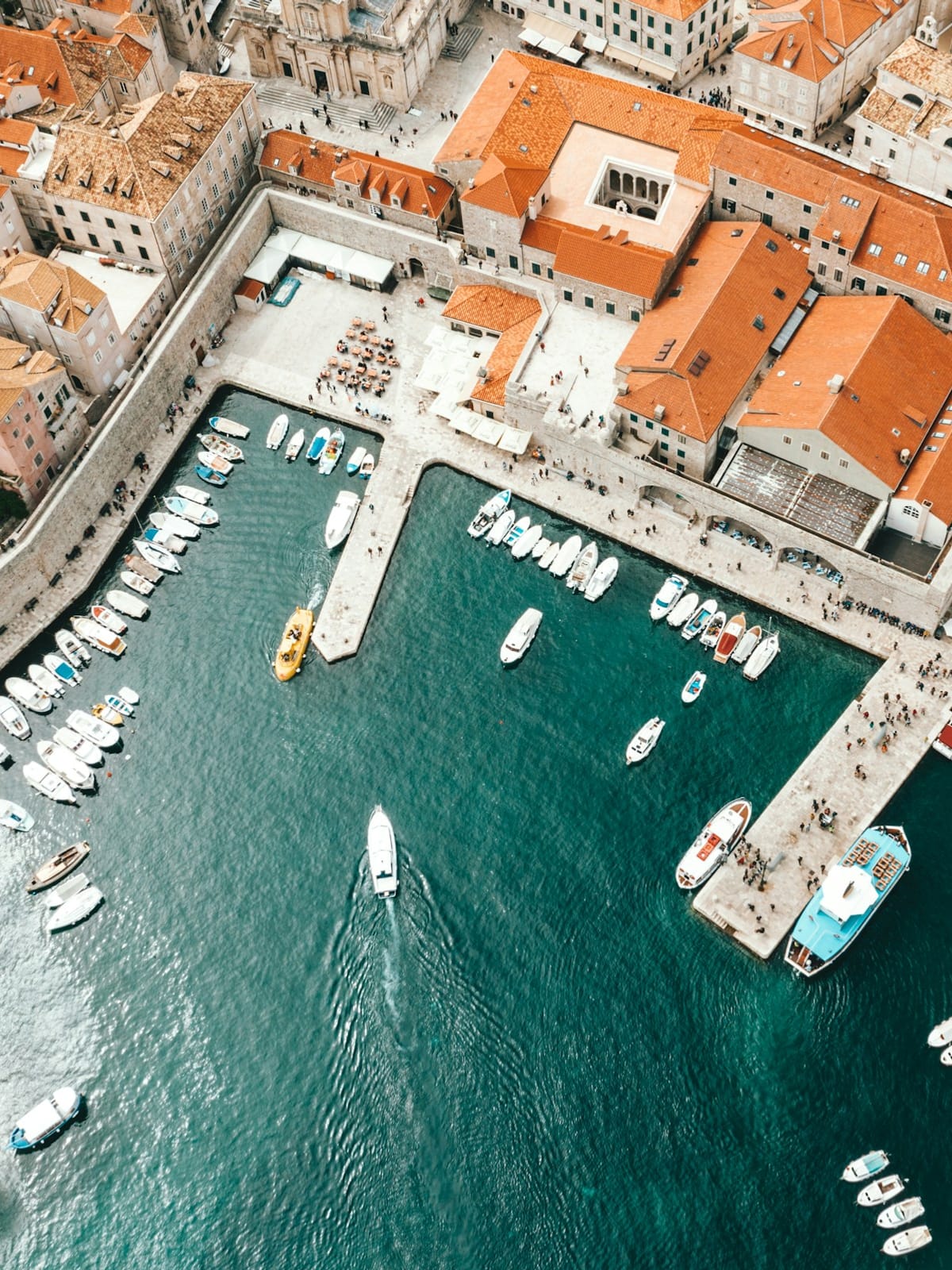
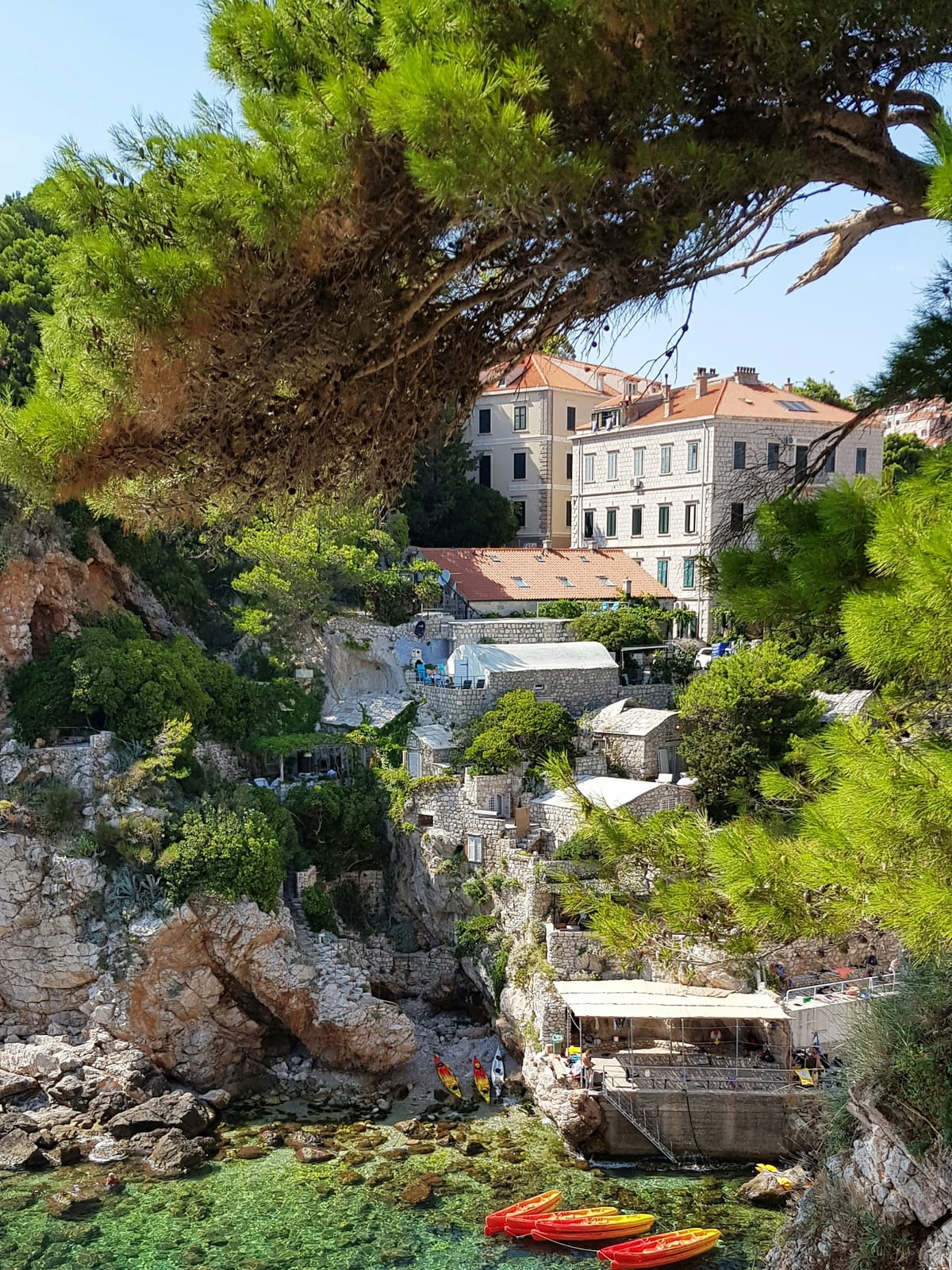
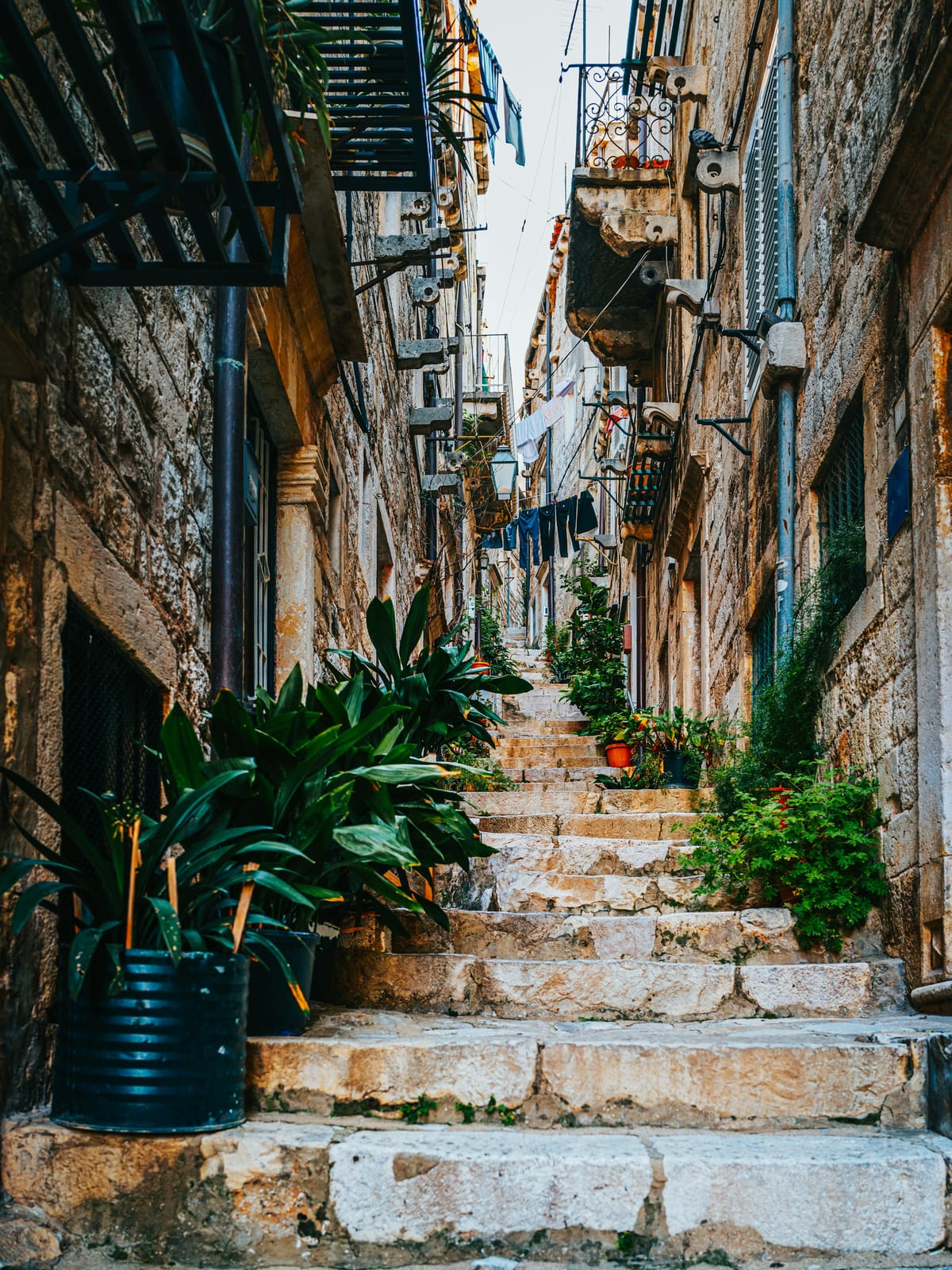
Dubrovnik's walls — two kilometres around, 6 metres thick, with towers and bastions — enclose a perfectly preserved medieval city. Walking the walls is the classic Dubrovnik experience: the sea on both sides, the terracotta roofs beneath, the light turning golden in the late afternoon. The Rector's Palace, the Sponza Palace (the customs house), the Cathedral with its silver altarpiece — every building has lived a politically charged history.
Between these cities are smaller walled towns: Zadar, Trogir (whose Radovan Portal is the masterpiece of Croatian Romanesque sculpture), Korčula (whose herringbone medieval plan is unique), and islands like Hvar (lavender fields, Venetian harbour, wine) and Vis (the last unspoiled island on the coast, where the Yugoslav navy was based — less touristy and worth the detour).
How many days in Croatia
| Duration | Best for | Rough itinerary |
|---|---|---|
| 5–6 days | First visit, coast only | Split (2–3 days), Dubrovnik (2–3 days); fly in and out |
| 8–9 days | The complete picture | Zagreb (1–2 days), Plitvice (1 day), Split (2–3 days), Dubrovnik (2–3 days) |
| 10–12 days | Slow travel, islands | As above plus Hvar (1–2 days) or Vis (1 day), or extend Plitvice and add Motovun truffle region |
| 14+ days | Complete exploration | As above plus Zadar, smaller islands (Korčula, Lopud), and more time in the interior |
When to visit Croatia
May and early June: warm (20–24°C / 68–75°F), the Adriatic beginning to warm, hotels fully open, beaches not yet packed. July and August are the peak — hot (28–32°C / 82–90°F), crowded, most expensive. The sea is swimmable but so are a million other people. September is many travelers' ideal month: warm (22–28°C / 72–82°F), the sea still hot, families back to school, the Adriatic becoming yours again. October is mild (18–22°C / 64–72°F), still swimmable until mid-month, autumn light starting to show.
April is mild (14–18°C / 57–64°F), spring beginning, flowers blooming. October the same but cooler. November onwards it cools steadily; the Dalmatian coast stays Mediterranean but the north gets chilly. Winter (December–February) is cool (8–12°C / 46–54°F), quiet, and most coastal resorts close or reduce staff, though cities stay open.
Avoid July and August unless you specifically want the energy and crowds. May, June, September, and early October are the reliably pleasant months.
Getting around Croatia
Most travelers fly into Zagreb or Split. The coastal highway runs from Zadar south to Dubrovnik — a beautiful drive with Adriatic views, but narrow and winding in places. Private car and driver is the most relaxed way, especially if you're exploring smaller towns and islands. Buses connect every city and are reliable, though they follow the scenic route and take time.
Between islands: ferries run regularly from Split and Dubrovnik to nearby islands (Hvar, Vis, Korčula, Lopud). The ferries are cheap and reliable, and the sea journey is part of the experience. Private boats or speedboats are available if you want to skip ferry schedules.
Plitvice is most easily reached by private car from Zagreb (two hours). The park itself requires walking — boardwalks and footpaths are the only way through. Trains connect Zagreb and the coast, but they're slow; most travelers prefer driving or flying.
First-timer mistakes in Croatia
Don't skip Zagreb thinking it's just a transit point — the museums and café culture are worth two full days. Don't visit the coast without Plitvice — it's the hinge between two entirely different Croatias. Don't assume you need to walk Dubrovnik's walls at 2 p.m. in August — the crowds and heat will destroy the experience; go at dawn or after 6 p.m. Don't underestimate travel time between cities — the Dalmatian coast is beautiful but not straight; Split to Dubrovnik takes about four hours by car. Don't skip the smaller islands (Vis, Korčula) just because they're less famous — they're often better. Don't expect to see the entire coast in a week — it's longer than it looks on the map.
Practical information for visitors
Passport and visas: US and Canadian citizens do not need a visa to visit Croatia for up to 90 days. Croatia is part of the Schengen Area, so the 90-day limit applies across multiple Schengen countries. Check current requirements with your embassy. Your passport should be valid for at least six months beyond your travel dates.
Money and cards: Croatia uses the euro (€). It replaced the kuna in January 2023. ATMs are widespread in cities and major towns; smaller villages may be cash-only. Credit cards work in hotels and restaurants but some smaller places prefer cash. Tips are not obligatory but rounding up or 5–10% is appreciated in restaurants.
Language: Croatian is the official language. English is widely spoken in hotels, restaurants, and tourist areas. In villages and smaller islands, locals appreciate an attempt at Croatian — 'dobar dan' (good day), 'hvala' (thank you), 'molim' (please) go a long way.
Health and safety: Croatia is very safe for tourists. Petty theft in crowded areas (Dubrovnik's main streets, Split's palace) does happen, but violent crime is rare. Tap water is safe. Sunscreen is essential in summer. Travel insurance is wise, especially if you're planning water activities or hiking.
How we plan your Croatia trip
Because every Black Deer Travel trip is private, we build your Croatia itinerary around your interests rather than a fixed route. Prefer medieval cities and art history? We add an archaeologist at Split and Zadar, extend the museums of Zagreb. Want island time and swimming? We increase Hvar or Vis, add boat days. Interested in food and wine? We arrange a private truffle tasting in Motovun and wine experiences on the Pelješac Peninsula. You tell us when you can travel and how many days you have — we'll suggest the best pace for the season, reserve your accommodations and guides in advance, and handle the logistics. A real human responds to your inquiry within one working day.
Frequently asked questions
What is the best time to visit Croatia?
May–June and September–October are ideal — warm, the Adriatic open, not at peak heat or crowds. September is especially popular as families return to school but summer weather continues. July and August are hot and crowded. April and late October are mild and quiet but cooler for swimming. Winter on the coast is Mediterranean and peaceful but many resorts close.
How many days do you need in Croatia?
Eight to nine days is ideal for a complete first trip: one or two days in Zagreb, one day at Plitvice Lakes, three days in Split and surrounding cities, and three days in Dubrovnik. Five to six days works if you focus on the coast only (Split and Dubrovnik). Two weeks lets you add islands (Hvar, Vis, Korčula), explore the interior more thoroughly, or move more slowly.
Is Croatia expensive to visit?
Croatia is less expensive than Western Europe but more than Southeast Europe. The coast (Split, Dubrovnik) is pricier than the interior (Zagreb, Plitvice). Off-season (April, October, November) is cheaper than July–August. Private tours include accommodations, guides, and transfers, which control costs; meals and personal expenses are separate.
Should I rent a car or use a driver?
The winding coastal roads are navigable but not ideal for every driver. A private driver lets you relax, enjoy the views, and avoid stress on unfamiliar roads. Public buses work but are slow. If you're comfortable with manual transmission and narrow European roads, a rental is economical. Most travellers prefer a driver.
Can I combine Croatia with other Balkan countries?
Yes. Many travelers add Bosnia and Herzegovina (Mostar is about two hours from Split or Dubrovnik), Slovenia (Ljubljana is two hours north of Zagreb), or Montenegro (the Bay of Kotor is three hours south of Dubrovnik). We can build multi-country itineraries if you're interested.
What do I need to know about ferries to islands?
Ferries run regularly from Split and Dubrovnik to nearby islands (Hvar, Vis, Korčula, Lopud). They're cheap, reliable, and enjoyable — the Adriatic views are part of the experience. Schedules change seasonally; we book in advance. Private speedboats are available if you prefer flexibility over cost.
 Quick cookie chat